Internal & External Link Building for E-commerce

 May 20,2026
 By SEO ANALYSER
Internal and external link building for e-commerce is about controlling how authority, relevance and intent signals move through an online store. Search engines evaluate not only what pages exist, but how those pages connect and support one another.
For online retailers, scale creates complexity. Thousands of category, product, filter and content URLs can compete for crawl priority and ranking signals.
A stronger link building framework connects internal architecture with external authority acquisition so visibility, conversion and long-term growth work together.
The role of internal linking in e-commerce architecture
Internal linking tells search engines which pages matter most. In e-commerce, category pages, product listings and blog content all compete for attention. Without a clear plan, your most valuable pages may not get the support they need.
A strong internal linking structure moves authority from high-trust pages to the pages that drive revenue. To do this well, you need to understand crawl depth, anchor text context and where links are placed.
Navigation, breadcrumbs and in-content links each play a different role. Together, they shape topical relevance and site hierarchy. When they work in sync, crawl friction drops and rankings become more stable.
For example: internal links tell search engines what matters. In large catalogues, that signal can be the difference between ranking and being ignored.
Designing a sustainable linking strategy
Your linking strategy should reflect business priorities, not just convenience. Think about product lifecycle, margin and seasonal demand when deciding where internal links go.
Category pages often act as authority hubs. They link down to products and across to related collections. This creates relevance clusters that search engines can read clearly.
Content pages also play a strategic role. Educational articles can pass authority into transactional pages, but only when the intent alignment is deliberate. Accidental connections do not deliver the same result.
| Link type | Best use in e-commerce | Why it matters |
|---|---|---|
| Navigation links | Main categories, priority collections and important store sections. | They define the core hierarchy of the site. |
| Breadcrumb links | Category paths, parent collections and product location. | They support crawl paths and help users move back through the store. |
| In-content links | Blog posts, buying guides and comparison content. | They pass contextual relevance into commercial pages. |
| Related product links | Product pages, bundles and alternatives. | They support discovery and help authority move deeper into the catalogue. |
A sustainable linking strategy grows and shifts alongside your inventory and demand patterns.
Backlinks and external authority flow
Backlinks are still one of the strongest trust signals in search. For e-commerce brands, the challenge is directing that authority to pages that actually convert, not just collecting links without a plan.
External links work best when they support category pages and evergreen content. These pages can then pass authority deeper into the site. Sending all links to your homepage limits their impact across the rest of the store.
A backlink strategy must also manage risk. Links from low-quality sources introduce volatility. On large sites, this can cause outsized damage. Set clear quality thresholds and apply them consistently.
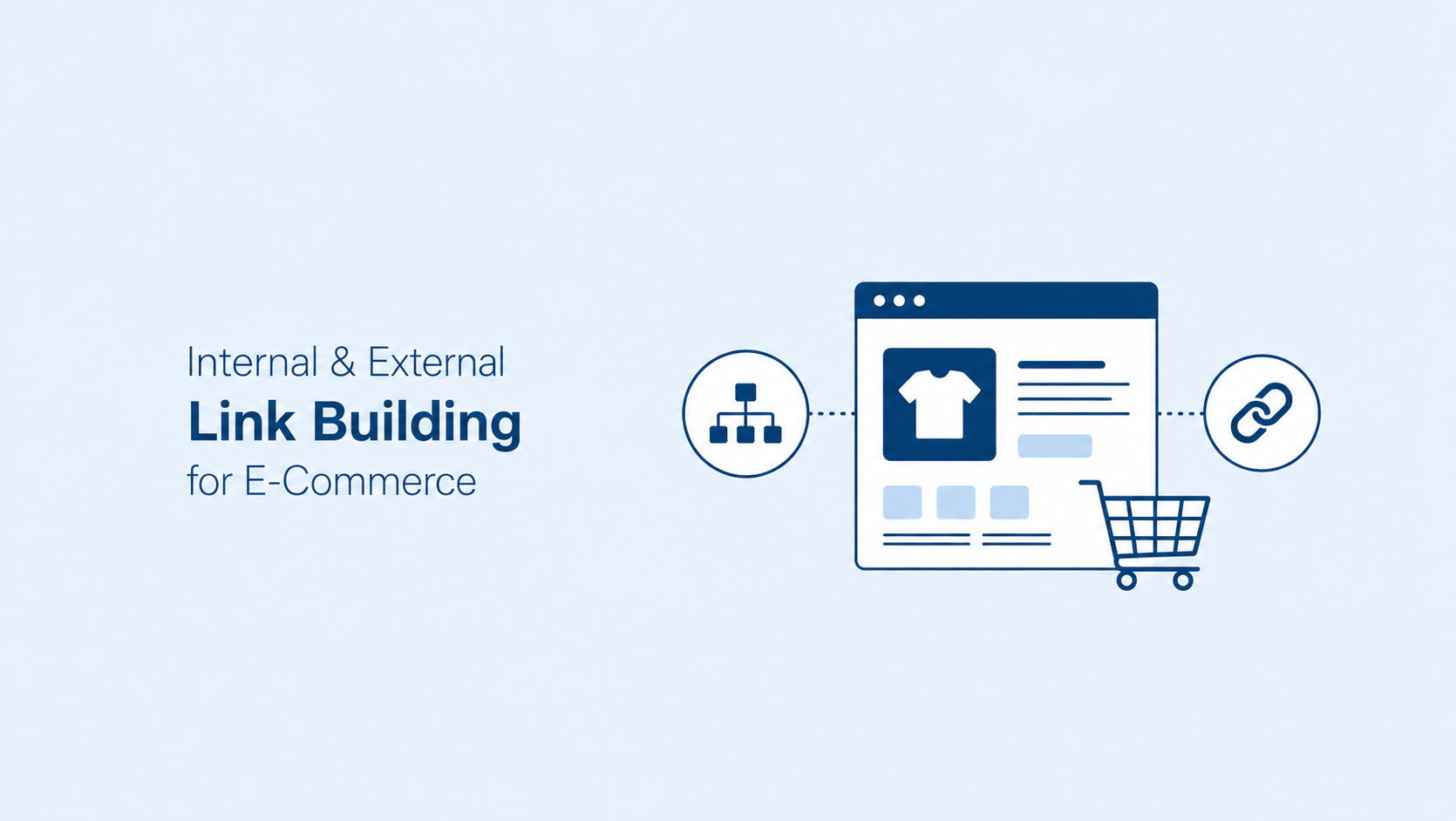
For example: a backlink that lands on the wrong page wastes its value. Strategic targeting ensures external authority reaches pages that convert.
Integrating internal and external signals
The strongest e-commerce linking frameworks treat internal and external signals as two parts of the same system. External links bring authority in. Internal links decide where that authority goes.
Mapping authority flow helps SEO teams spot bottlenecks. Some pages attract links but fail to pass that value further into the site. That is a missed opportunity, and internal link adjustments can often fix it without extra outreach.
This integration also improves crawl efficiency. Search engines follow links like pathways. A coherent structure reduces wasted crawl budget and can support more stable indexing over time.
| Authority source | Common issue | Better approach |
|---|---|---|
| Homepage backlinks | Authority stops at the homepage or main menu. | Use clear internal paths to priority categories and content hubs. |
| Blog backlinks | Links support informational content but not commercial pages. | Add contextual links from guides to relevant categories and products. |
| Category backlinks | Authority reaches categories but not deeper product pages. | Improve product linking, filters and related collection paths. |
Design your linking system as a whole, not in disconnected pieces.
Common linking pitfalls in online stores
Many e-commerce sites have orphaned pages. Products get cut off due to filters, pagination or discontinued categories. These pages struggle to rank, even when the site has external authority.
Over-optimisation is another risk. Too many exact-match anchor texts create unnatural patterns. Balance and context matter far more than repetition.
Static linking structures are also a problem. Links should evolve based on ranking movement, inventory changes and conversion data. A fixed structure goes stale quickly.
| Pitfall | Why it hurts performance | What to do instead |
|---|---|---|
| Orphaned product pages | Search engines and users struggle to find them. | Reconnect them through categories, related products and buying guides. |
| Exact-match anchor overuse | It can create unnatural linking patterns. | Use descriptive, varied and context-aware anchor text. |
| Homepage-only backlinks | Authority does not reach deeper commercial pages. | Target hubs and use internal links to distribute value. |
| Static internal links | The structure stops matching inventory and demand. | Review links regularly using ranking, crawl and conversion data. |
Avoiding these pitfalls takes ongoing evaluation, not a one-time setup.
Measuring link performance and impact
Measure outcomes, not volume. Internal links should improve crawl frequency, indexation and how rankings are spread across the site. External links should show clear authority growth in the areas you are targeting.
Segment performance by page type to see how well authority is flowing. If category pages improve but product pages do not move, you may have an internal bottleneck.
Linking performance should also be tracked alongside conversion metrics. Strong visibility with no revenue impact means your SEO and business goals are out of sync.
| Metric | What it shows | How to use it |
|---|---|---|
| Crawl depth | How far key pages are from important entry points. | Reduce depth for high-value categories and products. |
| Indexation by page type | Whether important page groups are eligible to rank. | Find technical or linking gaps across categories and products. |
| Internal links per priority page | How much internal support a page receives. | Strengthen links to commercial pages with weak support. |
| Backlink quality | Whether external links are relevant and trustworthy. | Prioritise quality over raw link count. |
| Organic revenue by page type | Whether visibility is producing business value. | Align link building with commercial outcomes. |
Measurement connects strategy to execution and keeps both on track.
FAQs
Summary
E-commerce SEO performance is shaped by how links build authority and relevance. Internal structures decide whether pages get found and supported, while external links provide trust signals that lift visibility.
A disciplined linking strategy connects technical architecture to commercial goals. Prioritise hub pages, manage authority flow and avoid common pitfalls such as orphaned pages, weak internal paths and random backlink targeting.
At its core, e-commerce link building is about control. Businesses that build and maintain intentional linking systems gain more predictable and scalable search performance.