Why Topic Clusters and Pillar Pages Matter for Modern SEO

 May 18,2026
 By SEO ANALYSER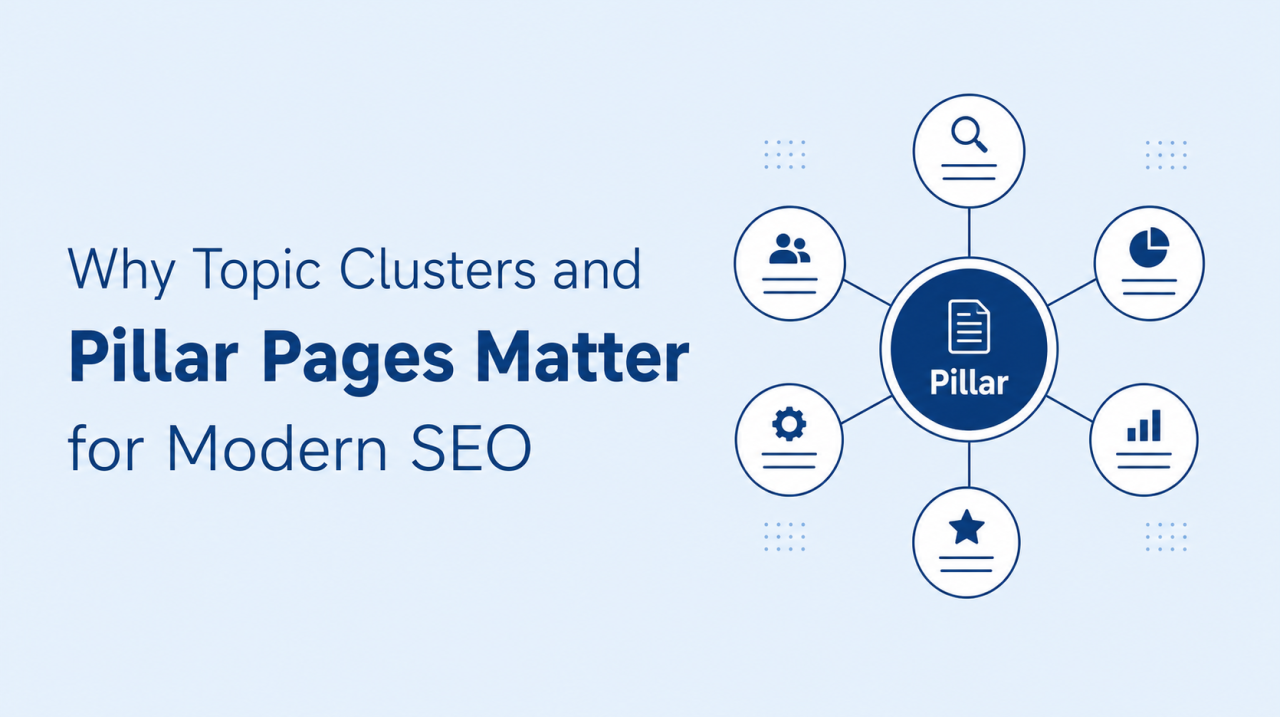
SEO strategy · Topic clusters
Topic clusters and pillar pages help search engines judge depth and authority across related pages, not isolated keywords.
Short answer
Group related pages so search systems can judge depth
Search engines now judge websites by clear structure, deep relevance and real topic understanding, not scattered individual signals. Websites that show clear topics and logical layouts beat sites built around disconnected pages.
At the centre of this shift is the topic cluster approach. It helps search engines understand how your pages relate and how deeply you cover a subject. Sub-topics and pillar pages working together set the foundation for search authority that grows over time.
Theme focus
Why topic-based content outperforms isolated pages
Topic-based writing matches how search engines check relevance and expertise. Instead of treating each page like a lonely island, grouping your content shows you intend to master a specific subject area. Search systems can then see related pages as a complete, unified package.
Isolated pages often struggle to show real authority because they lack helpful backup. Without supporting content, a single page looks too narrow in scope, even if it is beautifully written. Building pillar pages solves this by surrounding your main ideas with useful sub-topics.
From a user view, this theme-focused setup makes your site much easier to read and navigate. Readers can explore related concepts naturally. That boosts time on site and satisfaction. These habits tell search algorithms the website is useful, which is the outcome you want from SEO-friendly content.
For writing teams, the method also improves day-to-day efficiency. Planning around core themes reduces repeated ideas and ensures every page serves a clear purpose within your topic cluster strategy. That is how you win at modern SEO.
Authority hubs
How pillar pages establish topical authority
Pillar pages act as central hubs that map out the full scope of a subject. They provide a broad overview while linking out to more detailed supporting pages. That structure allows search engines to identify the main page as an authoritative guide.
You build authority through breadth, clarity and internal links rather than raw word count. A strong main page outlines key concepts without overwhelming the reader. Supporting pages in your topic cluster then expand those concepts in focused detail. That focus on structure is how teams master SEO content without chasing word-count targets.
Search engines look at these pages to judge your writing goals. When a site clearly defines a topic and backs it up consistently, it signals subject mastery. That builds trust and improves ranking stability over time.
These pages also support your modern SEO work by providing a clear layout for updates and growth. As new sub-topics appear, you can add them without disrupting the overall website structure.
Connections
The role of internal linking in topic clusters
Internal links connect related pages in a way that proves how they fit together. Within a topic cluster, these links guide both users and search engines through a logical flow of ideas. That makes it easier for search engine bots to crawl your site and understand context.
Well-planned internal links share authority from pillar pages to supporting content and back again. This creates a loop that strengthens the entire group of pages, rather than trapping SEO value on a single URL. Where you place the links and how relevant they are matters far more than raw link volume.
For example, a main page focused on technical SEO might link to detailed pages about site structure, crawling and getting indexed. Each supporting page then links back to the main pillar using clear anchor text. This shows search engines how topics match without repeating yourself. A website audit can surface crawl and index issues that stop those supporting pages from playing their part.
Good internal linking also makes the site easier to use. Clear paths help readers find the right facts quickly. That removes friction and improves experience, which is exactly what you want in modern SEO.
Coverage
How search engines evaluate content depth and coverage
Search engines judge depth by looking at how well you cover a topic across multiple pages. They measure coverage through clear language signals, matching sub-topics and a steady focus. Thin or surface-level content rarely ranks well in competitive fields.
Real depth does not mean writing massive, endless paragraphs on a single page. Instead, it comes from a smart network of focused pages that tackle a subject together. This distributed setup matches how people search for and read facts today.
Good content coverage also depends on keeping strict boundaries. Pages that drift into unrelated topics ruin relevance and weaken your topic cluster signals. Defining a clear scope boosts indexing and helps you shape content for search engines that stays on topic.
By grouping writing into meaningful themes, you help search engines see how deeply you understand your field. That wins visibility across a wider range of search terms in modern SEO. It also proves why well-structured pillar pages are valuable for site growth.
Results
Measuring performance of topic cluster strategies
Tracking success must look beyond single-page rankings. Topic cluster success shows up in total traffic, user clicks and authority signals across all related pages. This requires a much wider view of your data, which is why a website content audit matters when you judge cluster health.
Stats like overall traffic trends, internal link clicks and keyword spread tell you if the cluster is healthy. Ranking growth often happens slowly as search engines re-evaluate topic relevance.
Steady tracking also tells you exactly what to update next. An SEO content audit helps you polish underperforming pages without breaking the whole website structure. That protects the search value you have already built. Smart tracking is a core part of winning at modern SEO and getting the most from your pillar pages.
A practical next step
Where SEO Analyser fits
SEO Analyser includes a module named Website Audit.
Common questions
FAQs
What is a topic cluster in SEO?
A topic cluster is a group of related content pages organised around one central theme. It includes a main page, backed by focused sub-pages that dive into specific parts of the topic. This structure helps search engines understand how your pages connect and how much authority you have. A practical step is to map your current content into themes before writing anything new. That ensures clarity and reduces overlapping ideas.
Why are pillar pages important for search visibility?
Pillar pages map out the full scope of a topic for both readers and search engines. They act as authoritative hubs that logically connect related articles. This improves relevance signals and keeps rankings steadier. Creating a clear, broad overview page is a practical starting point. Supporting pages should then link back to it consistently.
How does internal linking affect topic clusters?
Internal linking strengthens groups of pages by showing exactly how they connect. It helps search engine bots crawl content and understand context. Weak linking habits dilute signals and stop authority from flowing across the site. Check internal links for relevance and placement. Links should match what the reader wants to find next.
Can topic clusters improve content performance?
Yes. They improve results by giving you visibility across a wider range of search terms. They support better engagement by guiding readers through connected facts. That often leads to longer visits and stronger trust signals, which matter for modern SEO. Tracking performance at the group level gives clearer insights for smart updates.
How do you know if a topic cluster is successful?
A successful cluster shows steady growth in overall rankings and organic traffic across related pages. Supporting articles begin ranking on their own while boosting the main hub at the same time. Engagement improves across the group. Track these trends over time. Success is measured by long-term consistency rather than short-term spikes.
Summary
Winning at modern SEO is shaped by how well you organise, connect and group content across the website. Search engines reward structural clarity and topic relevance over scattered keyword tricks. A topic cluster with well-structured pillar pages matches how modern search systems judge authority.
By grouping related writing around one central theme, you signal deep knowledge and a clear editorial purpose. Main guide pages act as authoritative anchors. Shorter supporting articles back that hub by diving into specific sub-topics. Search engines can judge depth without looking at single pages in isolation.
References
Sources and further reading
- SEO AnalyserSEO content audit
- SEO AnalyserWhy a website content audit matters
- SEO AnalyserMaster SEO content
- SEO AnalyserHow to optimise website content
- SEO AnalyserWhat makes SEO-friendly content work
- SEO AnalyserWebsite Audit