Author Credibility in SEO: Verify Identity and Expertise

 Sep 27,2026
 By SEO ANALYSER
E-E-A-T & Trust
How to support a byline with accurate authorship, relevant experience and checkable evidence.
Short answer
Author credibility depends on relevant evidence
An author bio explains who created a page and why their background is relevant. Supporting evidence can include the work itself, first-hand experience, professional credentials where applicable, and reliable information elsewhere. External reputation research is useful, but a sparse search presence does not by itself prove that an author is unqualified or fictitious.
Definition
A bio makes claims that readers should be able to assess
A clear byline and author page help readers understand responsibility for the content. The supporting evidence should fit the topic: a hands-on product review may demonstrate actual use, while advice requiring professional qualifications calls for relevant credentials.
Google’s quality-rater guidance discusses researching content creators and reputation. It guides human evaluation; it does not describe a single author-ranking algorithm. Google also explains that E-E-A-T itself is not a specific ranking factor.
Consider a hypothetical credentialed author whose name matches an official professional register and whose cited work is relevant to the article. Those checks support specific claims. A LinkedIn profile may help identify the person, but it is often self-managed and is not independent verification of every statement in the bio.
See Google’s people-first content guidance for its explanation of E-E-A-T and the role of quality raters.
What actually gets checked
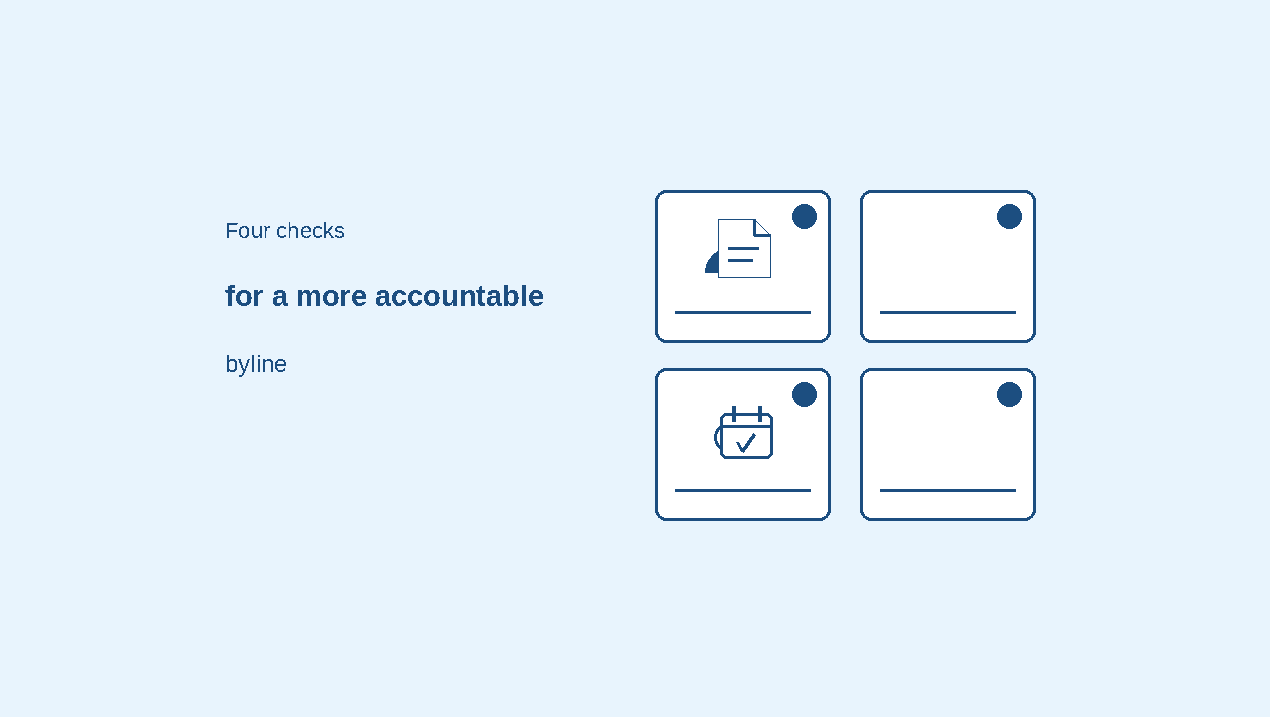
Four checks for a more accountable byline
-
01
Match the identity
Compare the byline, profile page and relevant public records. A common name needs context, such as an employer, field or stable profile URL. Do not publish private details to resolve ambiguity.
-
02
Check topic-relevant evidence
Look for work samples, documented experience and credentials that matter to this subject. Verify regulated credentials with the appropriate authoritative source where relevant.
-
03
Assess independent reputation
Consider reliable mentions and evaluations in context. An absence of search results is a limit on available evidence, not a negative verdict. A self-authored social profile is a useful identity clue, not equivalent to an independent endorsement.
-
04
Align the structured data
Ensure the visible byline and Article author structured data refer to the same Person or Organization. Google recommends an identifying URL or sameAs link; link only to pages representing the same author.
| Check | Useful evidence | What it cannot establish alone |
|---|---|---|
| Identity | A consistent byline and an unambiguous profile URL | Qualifications or reliability of every claim |
| Experience | Relevant work, methodology and documented first-hand examples | Expertise in unrelated subjects |
| Reputation | Independent, credible information in the relevant field | A guaranteed ranking or citation outcome |
| Schema | Accurate author name, type and identifying link | That the author’s claims have been independently verified |
For author identity properties, follow the Article author guidance.
In the product
Record evidence without turning it into a false score
For each important authorship claim, record the source, the date checked and what it actually confirms. Use clear outcomes such as “supported”, “not enough evidence” and “contradicted”. A missing profile should not be reported as fraud or as an automatic search penalty.
Keep your editorial review separate from any tool’s score. A product may flag incomplete author information, but its internal weighting, external searches and verification method require product documentation. Do not assume that a named author check implements Google’s human-rater process.
For a broader technical and retrieval review, use the AI search audit guide and verify each finding against the underlying evidence.
In the meantime
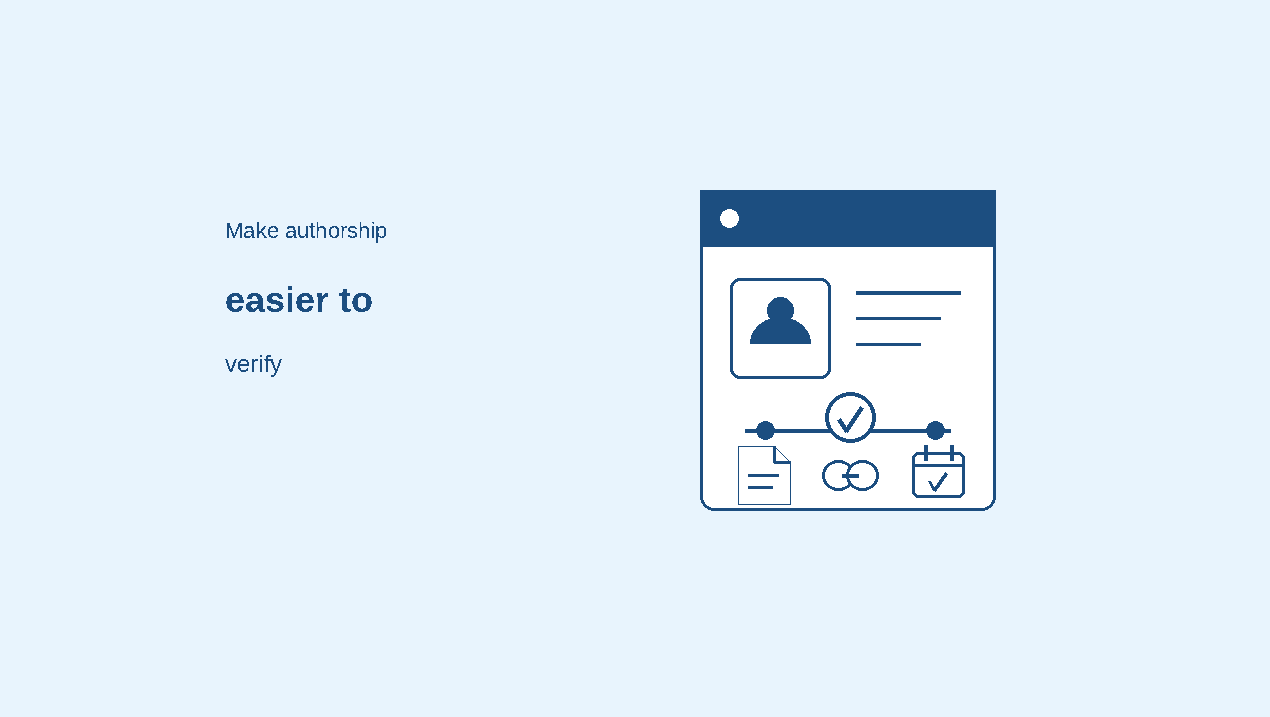
Make authorship easier to verify
-
01
Publish an accurate author page
Describe relevant experience and link to work that readers can inspect. Keep qualifications current and remove claims that cannot be supported.
-
02
Show how the work was produced
Where useful, explain testing, research, sources or expert review. Identify genuine reviewers and their contribution without inventing an approval process.
-
03
Use consistent identifying links
Keep the byline, author profile and public professional identity aligned. Link only to the author’s actual profiles; sameAs is for identity, not every article that mentions the person.
-
04
Check the rendered page
Confirm that the theme, editorial content and schema do not assign different authors. Avoid adding a second byline below one already supplied by WordPress.
Review trust signals alongside content quality
AI Visibility includes an E-E-A-T & Trust pillar. Treat tool findings as review prompts and assess the underlying authorship evidence before drawing a conclusion about a person’s credibility. For the repeatable monitoring workflow, see how to measure AI visibility.
Common questions
FAQs
Are author credibility and author authority identical?
They overlap, but this article uses credibility for the support behind an author’s claims and authority for recognised expertise in a field. Neither is a universal numeric Google metric.
Does an author need LinkedIn?
No. A professional profile can help identify an author, but LinkedIn is not a mandatory Google requirement. Use evidence relevant to the subject.
Does no external search presence mean an author is unreliable?
No. New authors, pseudonymous writers and people in less-public roles may have little searchable information. Assess the available work and evidence rather than treating absence as proof of poor quality.
What should Article author markup contain?
Accurately identify the Person or Organization responsible. Google recommends an identifying url or sameAs link as well as the author’s name and type; the visible attribution should agree.
Can a pseudonym be used?
A consistent pseudonym can identify a creator. Do not invent qualifications or expose private identity details; give readers appropriate evidence of the work and its authorship.
Does author schema guarantee rankings or AI citations?
No. Markup helps describe an identity. It does not certify credentials or guarantee selection by a search or AI system.
Summary
Make authorship accurate, understandable and supportable. Check evidence relevant to the topic, distinguish self-managed profiles from independent corroboration, and treat missing information as uncertainty. Keep the visible byline and structured data aligned without inventing a ranking formula or author biography.
References
Sources and further reading
- Google Search CentralCreating helpful, reliable, people-first content
- Google Search CentralArticle structured data and author guidance
- GoogleSearch Quality Rater Guidelines
- Schema.orgPerson
- SEO AnalyserAI Visibility