Evergreen vs. Trending Content, An SEO Content Strategy Guide

 May 19,2026
 By SEO ANALYSER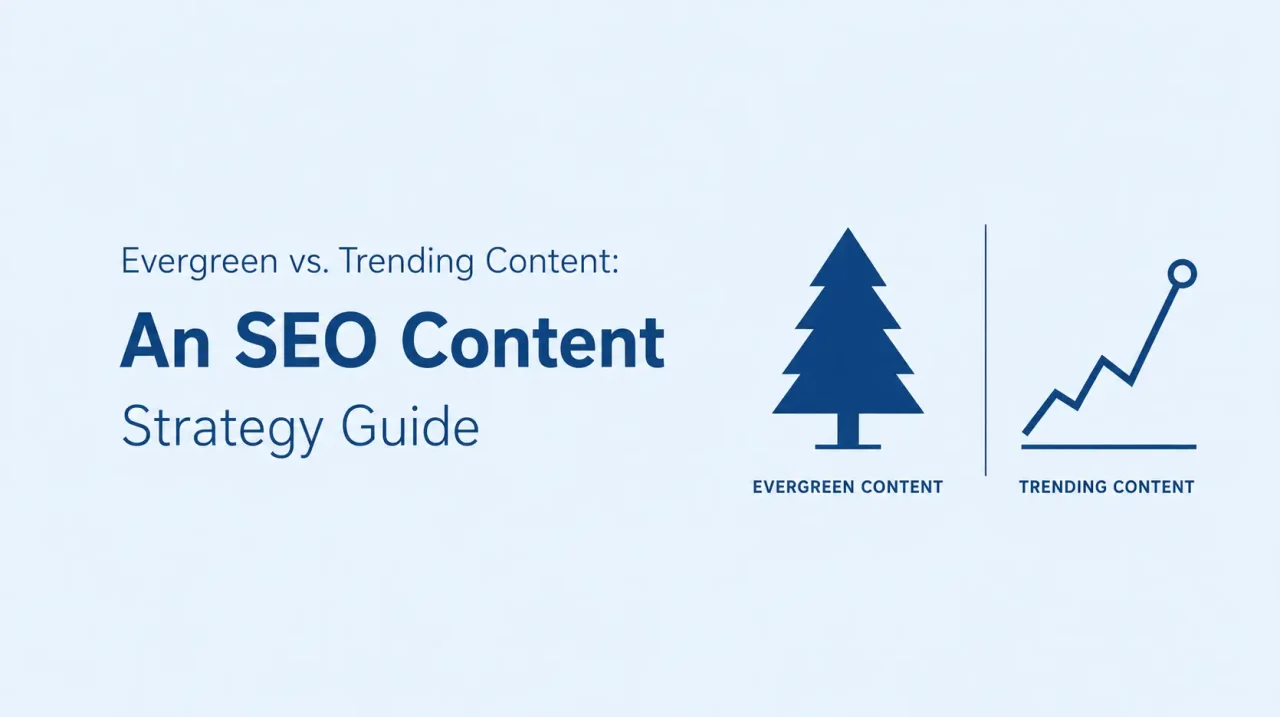
Introduction
Search visibility is no longer just about content volume. It is driven by the strategy behind your content decisions. SEO pros and business owners must now balance long-term value with relevance. This is crucial when navigating competitive search landscapes.
Content that performs well today may not last tomorrow. To fix this, you must align it with a clear planning framework.
Modern websites are judged on how well they answer user questions. They must satisfy ongoing needs while responding to quick shifts in demand. This requires a disciplined approach to planning your content. You need to consider the content lifecycle, search intent, and long-term performance impact. Clear goals determine whether your content builds value or goes stale quickly.
At the centre of this balance sits your content strategy. This strategy governs how evergreen and time-sensitive material work together within a scalable SEO setup.
Decisions around what, when, and how to publish directly affect your site. They influence your authority, how search engines crawl your site, and your long-term visibility.
Understanding both content types allows companies to spend their budget wisely. The difference between evergreen and trending content is structural, not tactical. It shapes how your site grows and competes over time.
Evergreen Content and Long-Term SEO Value
Evergreen content stays relevant no matter the season or time of year. Its main strength is that it answers stable user questions. Because people search for these topics consistently over long periods, this content forms the foundation of any good SEO plan.
Search engines reward evergreen pages because they build up authority over time. These pages steadily gain backlinks, user engagement, and internal links. As a result, they handle search algorithm changes much better. Their performance improves through steady growth rather than short spikes.
Evergreen material also helps with content optimisation. These pages create stable anchors for your internal links. They act as helpful reference points that share authority with related pages. This strengthens the overall topic focus across your entire website.
From a planning view, evergreen content means you do not have to publish constantly. It allows teams to focus on quality, depth, and clear structure rather than rushing to push out reactive posts.
Trending Content and Short-Term Visibility Gains
Trending content targets topics that are seeing a rapid spike in search demand. Its value lies in being fast, relevant, and responsive to current interests. When you do it right, it can drive huge amounts of short-term traffic.
Search engines show trending pages quickly when they match new search habits. This gives you a chance to win visibility before the competition gets too tough. Timing and speed are critical for success here.
However, trending content is highly unstable. Traffic usually drops once public interest settles down or moves on to something else. Without a clear plan, these pages can quickly become useless and blur your website’s focus.
Trending content works best when it is part of your broader content creation efforts. It should back up your main topics rather than sitting alone as an isolated post.
Strategic Balance Between Evergreen and Trending Content
Sustained SEO success requires a careful balance. You need both permanent and fast-response content. Evergreen pages build your authority, while trending content captures quick momentum. Together, they work as a team rather than competing against each other.
Evergreen pages provide the strong backbone that supports your frequent updates. At the same time, trending pieces can link back to your evergreen hubs. This strengthens your internal links. It also ensures that short-term traffic wins help your long-term growth.
This balance also makes your writing team more efficient. Teams can plan ahead for evergreen topics while keeping some free time for sudden trends. This reduces staff burnout and improves the quality of your work.
A balanced approach gives you search visibility both now and in the future. It protects your traffic from sudden drops while keeping your site fresh and timely.
How Search Engines Evaluate Content Freshness and Relevance
Search engines judge freshness based on what the user wants, not just the date on the page. Some searches need the latest news. Other searches value stable, deep information. Search algorithms change their settings to match these needs.
Freshness signals include how often you update, changes in user clicks, and relevant context. Trending content wins when quick updates match what users want right now. Evergreen content wins when updates fix accuracy rather than just adding newness.
Search engines also check if new content adds real value. They notice if it just repeats old facts. Useless updates hurt trust and make it harder for search engines to scan your site. Meaningful updates build your credibility.
Understanding how search engines judge your site helps you make better choices. It tells you exactly when to update evergreen pages and when to publish new trending posts.
Integrating Evergreen and Trending Content into a Unified Strategy
Good integration starts with a clear role for each content type. Evergreen pages should act as anchors for your main topics. Trending pages can then explore timely angles within those same areas. This keeps your website structure clean and organised.
Internal linking is vital here. Trending pages should link back to your evergreen hubs to build their authority. Doing this turns short-term user interest into long-term search success.
Your writing schedule should show this clear hierarchy. Long-term planning ensures your evergreen topics stay deep and complete. At the same time, monitoring tools help you spot quick trending opportunities. This stops you from making rushed decisions.
A joined-up approach ensures both content types help your overall business goals. It stops you from getting split, messy traffic that does not last.
Measuring Performance Across Content Lifecycles
Tracking performance must look at different goals. You should judge evergreen content on steady traffic, stable user clicks, and growing authority. On the other hand, you should judge trending content on speed, reach, and its peak traffic spikes.
Looking only at short-term data ruins your long-term strategy. You should measure trending success by how well it drives traffic to your permanent pages. You should measure evergreen success by how long it lasts.
Tracking your content based on its lifecycle leads to smarter updates. It makes it clear which pages you need to refresh, which ones to merge, and which ones to delete.
For Example:
A trending article that drives users toward a high-performing evergreen guide demonstrates strategic alignment rather than isolated success. This reflects effective lifecycle integration.
FAQ
What is the difference between evergreen and trending content?
Evergreen content stays useful over long periods. Trending content targets quick spikes in user interest. Each type plays a different role in your SEO plan. Evergreen builds long-term authority and stability, while trending content captures instant demand. A good practical step is to sort your content by its expected lifespan before you publish. This ensures your goals match the purpose of the page.
Does evergreen content perform better for SEO?
Evergreen content works better for long-term SEO because it builds up authority over time. Search engines love stable, complete guides. Trending content can win more traffic temporarily, but it rarely keeps that search visibility. Focusing on evergreen topics makes your website much more resilient. When you update these pages, focus on accuracy rather than just adding new facts.
Is trending content still worth creating?
Trending content is worth your time if it matches the main topics of your website. It drives quick traffic and gets your brand seen. However, without a clear plan, its value fades fast. Linking your trending pages back to your evergreen pages protects that short-term benefit. Good timing is vital.
How often should evergreen content be updated?
You should update evergreen content when facts change or when you need to make it more complete. Making unnecessary updates can hurt user trust. Regular content audits help you spot real areas for improvement. Focus on clarity, depth, and usefulness. Your updates should always make the page more authoritative.
How do you balance both content types effectively?
You can balance both types well by using clear planning and smart internal links. Evergreen content anchors your strategy, while trending content grows your reach. Each type should support the other. Using a clear writing schedule helps you stay consistent. This balance leads to much better SEO results.
Summary
Evergreen Content (Stability): This content addresses steady, long-term user questions. It forms your site’s foundation, builds authority over time through compounding backlinks, and keeps your search traffic stable.
Trending Content (Speed): This content targets sudden spikes in search demand. It captures quick traffic and brand visibility before competition heats up, but its value fades fast once public interest shifts.
The Perfect Balance: A successful strategy uses evergreen pages as core topic anchors and links fast-paced trending pieces back to them. This ensures short-term traffic wins feed your site’s long-term growth and domain authority.