Master SEO Content: Write, Structure & Rank

 May 19,2026
 By SEO ANALYSER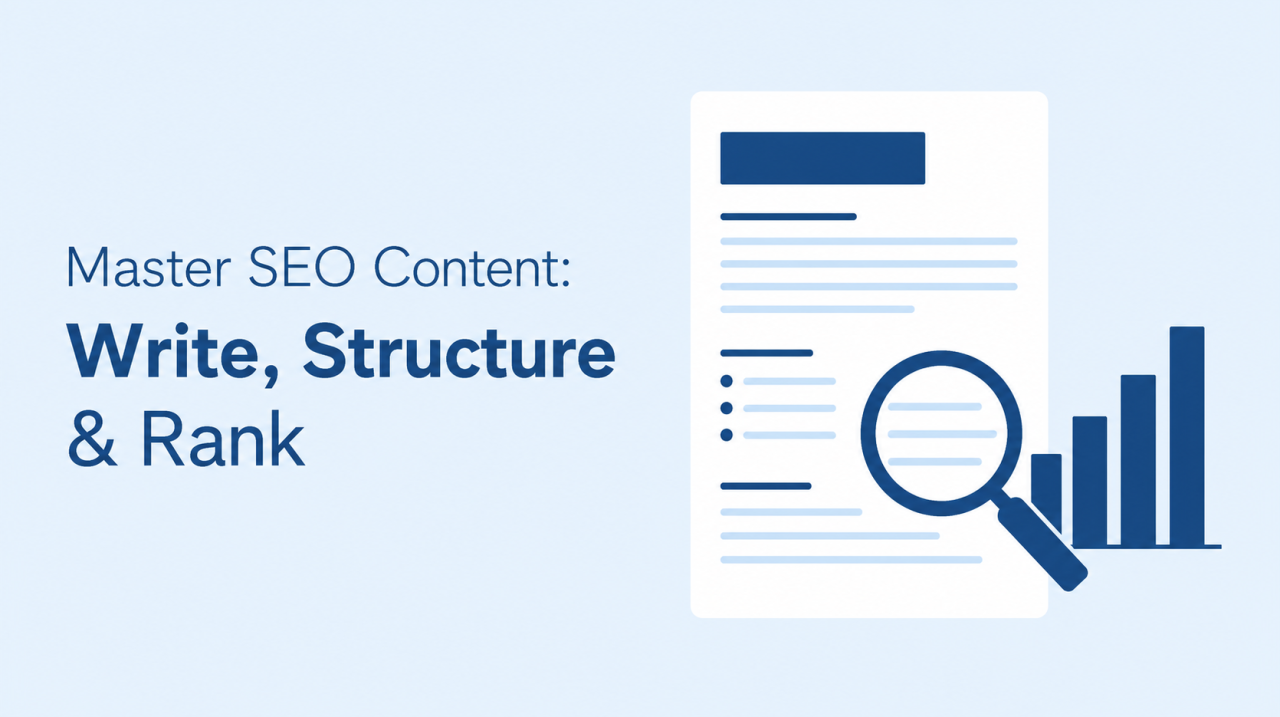
Introduction
Search performance now depends on more than just good writing. You need to plan, structure, and deliver content in a way that works for both users and search engines.
What you publish matters. But so does how you write it, how you organise it, and how you present it. Fragmented execution weakens your authority. A cohesive strategy builds visibility over time.
Modern search engines evaluate content on three things: semantic clarity, engagement signals, and structural efficiency. A well-written article that is poorly organised, or misaligned with how users actually read, will underperform. Structure and intent need to work together.
At the centre of this is content strategy. It governs how written and visual assets support discoverability and relevance across every format you publish. Strong strategy keeps content consistent while adapting to how consumption habits change.
As video and written content appear together in search results, a unified approach matters more than ever. Structure and optimisation are no longer separate concerns, they are the same discipline.
Strategic SEO Content Writing for Search Intent Alignment
Start with search intent
Good SEO writing starts with one thing: understanding what the user actually wants.
Search engines prioritise pages that answer a clear need, without confusion or unnecessary padding. Your writing needs to reflect its purpose from the very first sentence to the last.
Write in plain language
Plain language helps in two ways. It makes content easier to read. It also makes it easier for search engines to interpret. You do not need to simplify your subject matter, just remove the complexity that adds no value.
Address secondary intent carefully
Think about secondary intent too. Users often have related questions alongside their main one. Addressing those naturally, within the flow of your content, strengthens topical relevance. But if those ideas feel forced or disconnected, they hurt more than they help.
Pages that communicate clearly need fewer updates over time. They stay relevant as algorithms change because they were built around genuine user need, not around what ranked well at the time.
Structuring Content for Crawlability and Semantic Clarity
How structure affects indexing
Structure is not just a formatting choice, it directly affects how your content is indexed and ranked.
Search engines use headings, paragraph flow, and logical sequencing to understand what a page is about. When structure is unclear, meaning gets lost, even if the writing itself is strong.
Structure improves crawling and engagement
Clear sections also improve crawl efficiency. Bots move through well-structured content predictably, which strengthens relevance signals across the page.
Users benefit too. When information is grouped logically, readers find what they need faster. Better navigation leads to stronger engagement, and that reinforces how useful search engines perceive your page to be.
The long-term payoff
There is a long-term benefit as well. Consistent structure across your content library reduces technical debt. As your site grows, well-structured pages are easier to update, repurpose, and maintain.
Content Optimisation Beyond Keywords
Cover the topic, not just the term
Optimisation in 2026 is not about repeating keywords. It is about covering a topic thoroughly and in the right order.
Search engines now evaluate how completely a page addresses a subject, not how often a term appears. This means your focus should be on meaning, not frequency.
Well-optimised content covers related concepts, defines key terms clearly, and progresses logically. This builds ranking stability across a wider range of queries. Keywords still matter, but they support the content, not the other way around.
Do not neglect the basics
Optimisation also includes the basics: readable formatting, accessible language, and fast delivery. These improve both crawl signals and user experience at the same time.
Pages built this way need less ongoing maintenance. They hold their rankings without constant adjustments because they were built around genuine depth, not surface-level keyword targeting.
Video Content Optimisation for SEO Visibility
Optimise metadata and context
Video is now a real factor in search discovery, but only when it is optimised properly.
Without the right metadata and context, a video sits on your page without contributing to visibility. Strategic integration is what turns video into a search asset.
Search engines look at more than the video itself. They evaluate the title, description, and surrounding content on the page. A video placed within a relevant, well-written section performs far better than one dropped in without context.
Video should complement, not replace
Optimised video also opens up additional discovery pathways. It increases time on page, improves accessibility for different types of learners, and adds informational depth. Each of these reinforces the overall value of the page.
The key principle is simple: video should complement your written content, not replace it. When the two work together, they strengthen authority and broaden reach, without pulling your strategy in different directions.
Integrating Written and Video Content into a Unified Strategy
Give each format a clear role
Written and video content work best when they are planned together, not as separate projects.
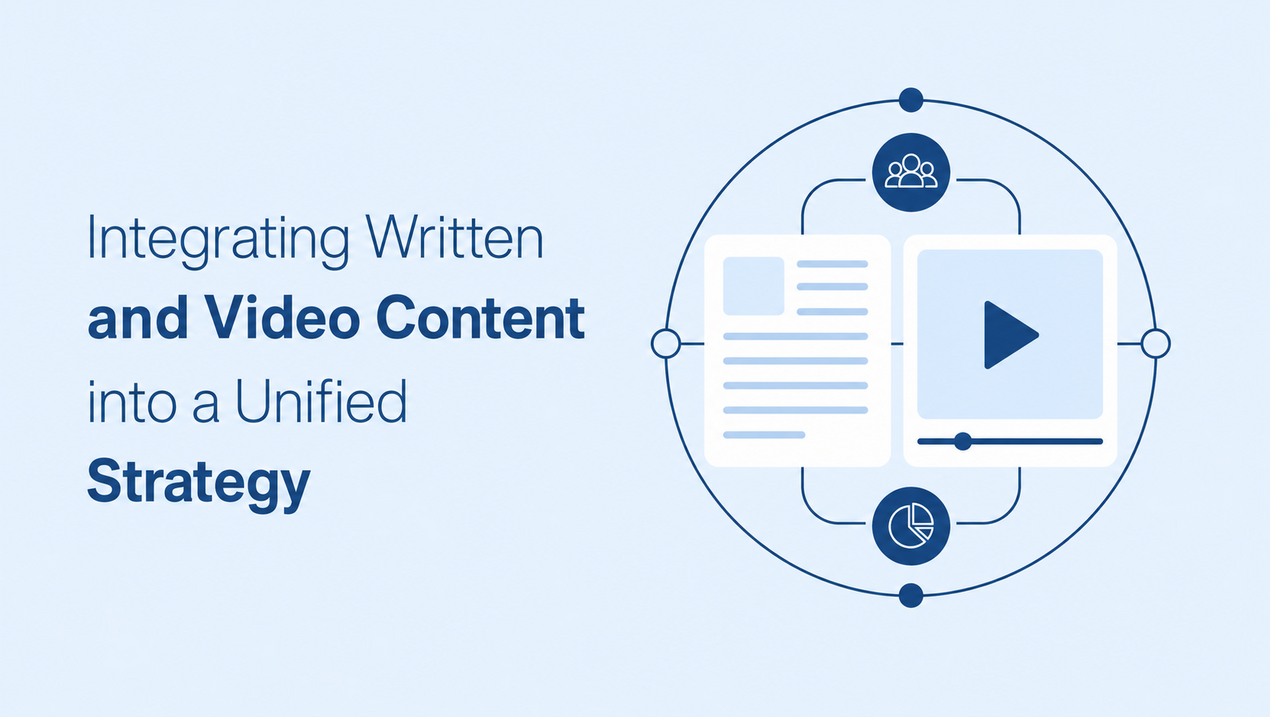
Each format has a clear role. Written content provides structure and depth. Video drives engagement and keeps users on the page longer. When they are aligned, they reinforce each other's relevance signals.
Align your editorial planning
Integration also improves internal linking. A well-placed video within a written article strengthens topical authority across the page. But this only works when both formats are built around the same intent from the start.
Editorial planning needs to reflect this. Publishing schedules and optimisation workflows should share the same objectives, otherwise you end up with duplication, inconsistency, and wasted effort.
A unified approach makes content creation systematic. Instead of reacting to gaps or trends, your team works to a shared plan. That consistency is what allows content to scale sustainably over time.
Measuring Content Performance Across Formats
Track each format separately
Measuring performance means understanding what each format contributes, not just tracking overall traffic.
Written content is evaluated through organic visibility, time on page, and engagement depth. Video performance is measured through interaction rates and retention. These are different signals, and they need to be tracked separately.
Combine formats in one SEO analysis
But isolated measurement only tells part of the story. Cross-format analysis shows how your written and video assets work together. That combined view gives you clearer direction for optimisation.
Watch trends over time
Tracking trends over time matters too. Stable performers can be refined and expanded. Underperforming pages can be adjusted before they become a problem. This approach reduces disruption, you improve what is working rather than overhauling everything at once.
Good measurement keeps your resources focused on long-term performance. It stops your team chasing short-lived gains and keeps content output aligned with real business objectives.
FAQ
Summary
Modern SEO success depends on how effectively content is written, structured, and optimised across formats. Writing quality alone no longer guarantees visibility without structural clarity and strategic alignment. Content must communicate intent clearly to both users and search systems.
Structured execution enhances crawl efficiency and semantic understanding, while thoughtful optimisation strengthens relevance without excess. Video content extends reach and engagement when integrated purposefully with written assets. Together, these elements form a cohesive performance framework.
By unifying writing, structure, and optimisation into a single strategic approach, organisations can scale content without sacrificing quality. Ongoing measurement ensures refinement remains intentional and sustainable. Mastery emerges through alignment rather than volume as search continues to evolve.