How to Optimise Website Content for Search Engines?

 Jan 28,2026
 By SEO ANALYSER
On-page SEO · Content optimisation
Learn how to optimise website content for search engines with better keyword targeting, structure, internal links and on-page SEO.
Short answer
Optimise content through user, search and business lenses
High-quality content can support visibility, engagement and conversion, but only when it connects three needs. Users need a useful answer, search engines need enough context to understand the page and the business needs a meaningful outcome from the visit.
Content optimisation brings these needs together. It improves the way information is selected, organised, presented and maintained without turning the page into a collection of repeated keywords.
The most effective approach is to review every page through three lenses: User, Search and Business. A page becomes stronger when all three point towards the same purpose.
Evaluation
Three lenses for evaluating website content
| Lens | Central question | Signs of a strong page |
|---|---|---|
| User | Does this page solve the visitor’s actual problem? | A clear answer, logical sequence, readable language and useful next actions |
| Search | Can search systems understand the subject and purpose? | Focused topic, descriptive headings, crawlable links and relevant supporting context |
| Business | Does the page support a meaningful organisational goal? | Relevant audience, suitable offer, clear positioning and measurable outcomes |
A page can perform well through one lens and still fail overall. An article may be readable but target a subject unrelated to the business. A service page may describe an important offer but fail to answer the questions users ask before contacting the company.
Intent first
Start with the user, not the keyword
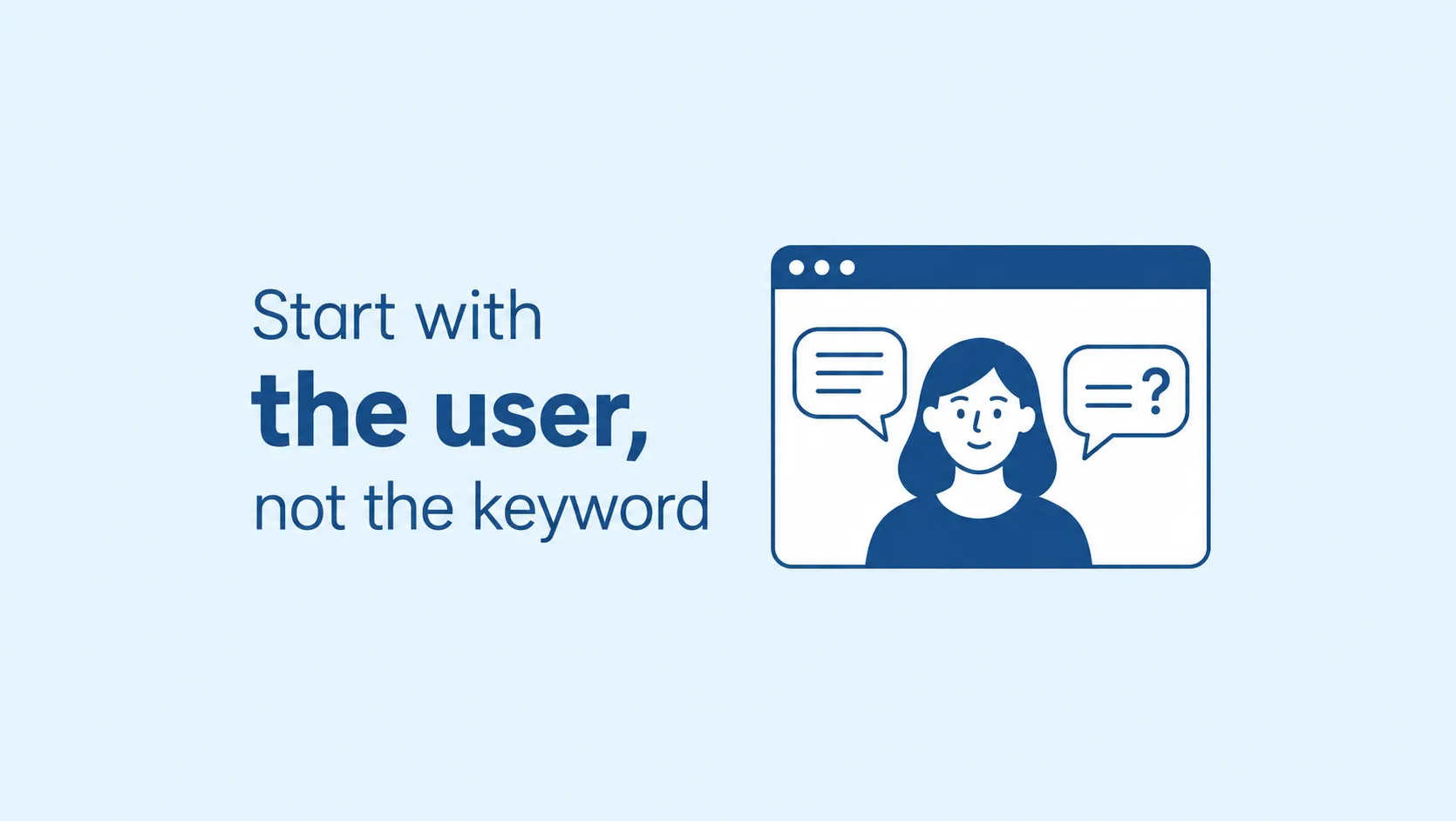
A keyword is evidence of interest, not a complete content brief. The same subject can represent several different motivations, and each may require a different response.
A user may want to understand a concept, compare alternatives, follow instructions or complete a purchase. Search intent helps identify which of these outcomes the page should support.
Informational intent
The user wants an explanation, answer or process. The page should establish the subject quickly, define unfamiliar ideas and provide enough detail to complete the learning task.
Commercial investigation
The user is considering several possible solutions. Comparisons, limitations, selection criteria and practical examples become more important than a broad introduction.
Transactional intent
The user is ready to take an action. Product, service and pricing information should be easy to find, while unnecessary background content should not delay the next step.
Navigational intent
The user wants a particular company, product or resource. Accurate titles, clear brand information and a predictable website structure help them reach the intended destination.
Research should examine both the wording of a query and the pages appearing for it. A disciplined approach to keyword research helps teams identify the difference between attractive search volume and useful audience demand.
Experience design
Turn search intent into a reading experience
Understanding intent is only valuable when it changes the page. Layout, tone, depth and sequencing should reflect what the reader is trying to accomplish.
A visitor looking for a quick definition should not have to read six introductory paragraphs. Someone comparing complex services may need more detail, evidence and explanation before reaching a decision.
The opening should confirm relevance
The first paragraphs should show that the page understands the visitor’s need. Avoid broad statements that could introduce almost any article.
Compare these openings:
Generic: “In today’s competitive digital landscape, high-quality content is more important than ever for businesses seeking online success.”
Focused: “A page may contain the right keywords and still perform poorly when it answers the wrong question or hides the answer beneath unnecessary background.”
The focused version introduces a recognisable problem. It tells the reader what the article will help resolve without exaggerating the outcome.
The middle should develop the answer
Each section should add information the reader needs. Definitions, examples, comparisons and limitations should appear where they support the argument rather than being added to increase length.
The ending should create direction
An article may lead to a related guide, while a commercial page may lead to a consultation, quote or purchase. The next action should follow naturally from the information provided.
Hierarchy
Build a structure that explains the topic
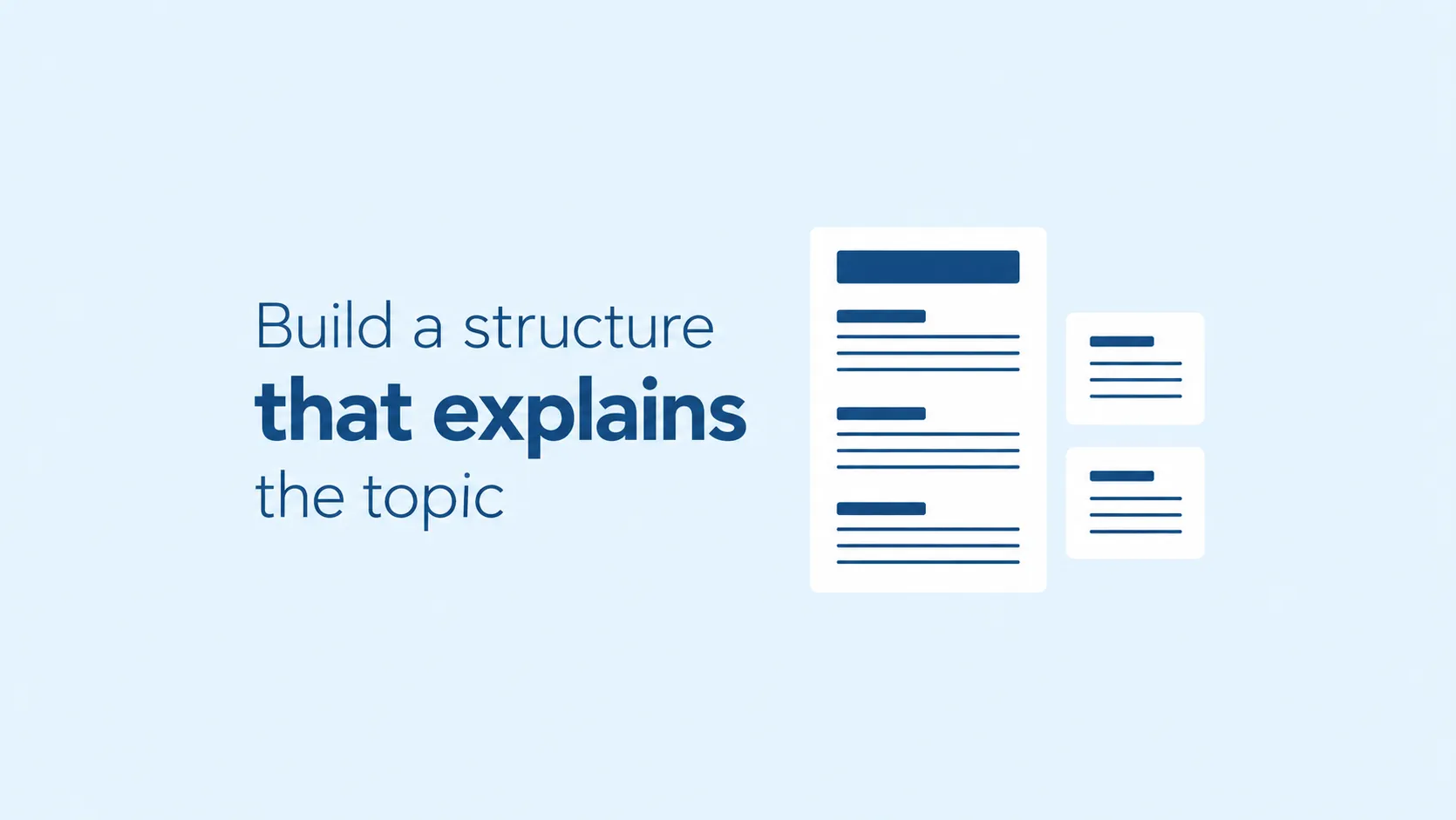
Content structure affects how quickly users can find information and how clearly the relationship between topics is communicated. A strong hierarchy is more useful than a long unbroken page, and teams that master SEO content treat writing, structure and intent as one connected system.
Use headings as a map
Headings should explain the direction of the page when read on their own. Generic labels such as “Benefits” or “More Information” provide little context.
Descriptive headings help readers decide whether a section is relevant. They also clarify how the main topic is divided into supporting ideas.
Keep paragraphs focused
Each paragraph should develop one main point. Shorter paragraphs are easier to follow on mobile screens, but sentence length and rhythm should still vary naturally.
Lists work well for related items, while tables are more suitable for comparisons and repeated fields. Neither should replace explanation when context is required.
Use emphasis selectively
Bold and italic text can highlight important concepts, but excessive emphasis creates visual noise. The most useful ideas should stand out because of their clarity, not because every keyword is styled.
Site architecture
Internal links should continue the conversation
Internal links connect related subjects and help users move towards deeper information. They also help search engines discover pages and interpret relationships across the website.
A service page might link to an explanation of its process. A broad pillar page might direct readers towards specialised articles. A supporting guide should link back to the wider topic it belongs to.
Use descriptive anchor text
The linked words should indicate what the destination covers. Generic phrases such as “click here” provide less information and can interrupt the reading experience.
Avoid linking for the sake of volume
Every link should have a reason to exist. Too many unrelated links can distract readers and dilute the structure the page is intended to create.
Assign each topic to a clear destination
Clear keyword mapping helps determine which URL should own a topic and where related pages should connect, and prevents several pages from competing for the same intent.
On-page consistency
Read the page from top to bottom
On-page optimisation works best when individual elements present one consistent message. The page title, search description, URL, headings and body content should all point towards the same purpose.
| Page element | What it should communicate | Common problem |
|---|---|---|
| Title tag | The page’s subject and expected value | Vague wording, repetition or a promise the page does not fulfil |
| Meta description | A relevant summary that helps users evaluate the result | Generic promotional language or no connection to search intent |
| URL | A concise and predictable description of the page | Unnecessary words, numbers or an outdated structure |
| H1 | The main subject of the visible page | Mismatch with the title or several competing primary headings |
| H2 and H3 headings | The logical development of the topic | Generic labels or headings used only for visual styling |
| Images | Visual information that supports understanding | Large files, missing context or alt text filled with keywords |
Title tags and meta descriptions
A title should identify the page accurately and distinguish it from other results. A meta description can summarise the page and encourage an appropriate click, although search engines may generate a different snippet when another passage is more relevant.
Heading structure
Clear headings improve readability and communicate the organisation of the page. They do not need to repeat the primary keyword in every section.
Image optimisation
Images should be resized for their display area, compressed appropriately and placed near the content they support. Descriptive alternative text improves accessibility when the image communicates meaningful information.
URL clarity
A short, descriptive URL helps users predict the destination. Changing an established URL should be considered carefully because redirects, internal links and existing signals need to be managed.
Substance
Quality comes from clarity, depth and distinctiveness
High-quality content is not defined by length alone. A long article can remain shallow, while a concise page can completely satisfy a specific query.
Clarity removes unnecessary effort
Readers should not need to interpret vague language or navigate repeated introductions to find the answer. Clear writing explains complex ideas without removing essential detail.
Depth answers the questions that matter
Depth comes from covering relevant decisions, limitations and follow-up questions. It does not come from adding loosely related sections to reach a target word count.
Distinctiveness gives the page a reason to be selected
Original examples, first-hand experience, internal data and useful frameworks can distinguish a page from generic summaries. Distinctive content offers something the reader cannot obtain from every competing result.
The strongest SEO-friendly content combines these qualities with accurate information and a clear audience purpose.
Lifecycle
Decide whether to update, expand, merge or remove
Content maintenance should begin with a decision about the role of each page. Publishing another article is not always the best response to declining performance.
| Decision | When it fits | What the work involves |
|---|---|---|
| Update | The page remains relevant but contains outdated details | Correct facts, refresh examples and review search presentation |
| Expand | The page satisfies the right intent but leaves important questions unanswered | Add useful depth without repeating existing material |
| Merge | Several pages compete for the same intent or contain substantial overlap | Combine the strongest information and redirect redundant URLs appropriately |
| Remove | The page is inaccurate, irrelevant and has no recoverable value | Check traffic and links, then remove or redirect according to the closest useful destination |
An SEO content audit helps you decide whether to update, expand, merge or remove each page. These decisions should consider organic traffic, conversions, backlinks, relevance and the page’s place within the wider site. Age alone is not a reason to delete content.
Ops rhythm
Make content maintenance predictable
Content updates are more effective when they follow a review cycle rather than reacting to every ranking fluctuation. Important pages can be grouped according to how quickly their information changes.
Product, pricing and regulatory pages may require frequent checks. Evergreen educational content may need less frequent review, while seasonal material should be examined before its next period of demand.
A useful review considers:
- Whether the page still matches its intended search intent
- Whether facts, examples and recommendations remain current
- Whether another page now overlaps with the same subject
- Whether titles and descriptions still represent the content
- Whether internal links point to active, relevant destinations
- Whether the page supports a measurable business purpose
Record meaningful changes and allow enough time to evaluate their effect. Rewriting the same page repeatedly makes it difficult to understand which improvement influenced performance.
A practical next step
Where SEO Analyser fits
SEO Analyser includes a module named Website Audit.
Common questions
FAQs
What does website content optimisation include?
It includes search intent, keyword selection, content structure, titles, descriptions, internal links, images, credibility and ongoing maintenance. The purpose is to improve understanding and usefulness, not simply increase keyword frequency.
How many keywords should one page target?
There is no fixed number. One page can address several phrases when they represent the same user need. Queries with different intent may require separate pages.
Does a longer article perform better in search?
Length alone does not determine usefulness. Content should be detailed enough to satisfy the query without adding repeated or unrelated sections to reach a word-count target.
When should similar pages be merged?
Consider merging pages when they satisfy the same intent and contain substantial overlap. Preserve the strongest material and manage redirects and internal links carefully.
How often should website content be reviewed?
Review frequency depends on how quickly the information changes and how important the page is. Updates should be triggered by evidence such as outdated facts, declining relevance or changing audience needs.
Summary
Optimise website content through three connected lenses: User, Search and Business. The page should answer a real need, communicate its purpose clearly and support an outcome that matters to the organisation.
Strong optimisation improves intent alignment, structure, internal links, on-page elements and credibility. Regular reviews then help teams decide whether each page should be updated, expanded, merged or removed.
References
Sources and further reading
- SEO AnalyserMastering keyword research
- SEO AnalyserWhy keyword mapping is essential for SEO growth
- SEO AnalyserWhat makes SEO-friendly content actually work
- SEO AnalyserWhy topic clusters and pillar pages matter
- SEO AnalyserSEO content audit
- SEO AnalyserMaster SEO content: write, structure and rank