

How to Improve Your AI Answer Inclusion Rate

 Sep 08,2026
 By SEO ANALYSER
AI visibility guide
Answer Inclusion Rate measures how often your brand shows up inside AI-generated answers, across ChatGPT, Google AI Overviews, Perplexity, Gemini and Copilot. Here is how the metric works, and how to improve it.
Short answer
Answer Inclusion Rate is a cross-platform visibility metric
Answer Inclusion Rate is the percentage of target prompts where your brand, product, or content shows up somewhere inside an AI-generated answer, across platforms such as ChatGPT, Google AI Overviews, Perplexity, Gemini, and Copilot. You improve it by writing answer-first, well-structured content on crawlable pages, backing it with credible signals (schema, citations, backlinks), and checking a defined set of prompts on each platform on a regular cycle.
Context
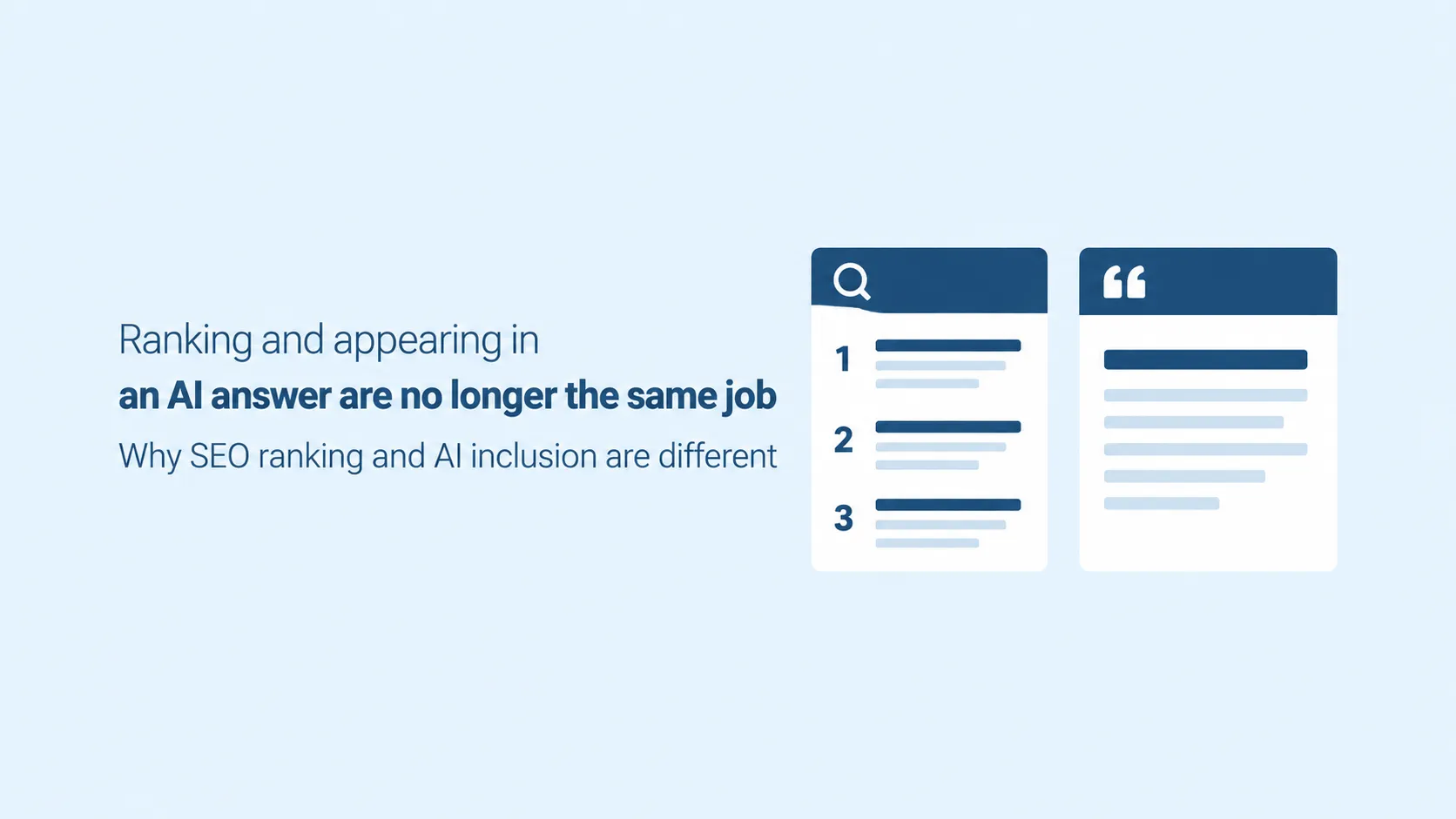
Ranking and appearing in an AI answer are no longer the same job
Ranking in traditional search results and appearing inside an AI-generated answer are no longer the same job. A page can rank on page one and still be left out of the summary an AI engine hands back to the user, and a page that never ranks highly can still get pulled into an answer if it is easy to extract and clearly credible. This guide explains the metric, then walks through the tactics that move it, across every major AI answer engine rather than just one.
Definition
What Is Answer Inclusion Rate?
Answer Inclusion Rate (AIR) measures how often your brand or content is mentioned, cited, or summarised inside AI-generated answers for a defined set of prompts, tracked across one or more AI platforms over time. It is usually expressed as a percentage: if you check 50 target prompts across an AI engine and your site shows up in 12 of the resulting answers, your inclusion rate for that engine is 24%.
It is worth separating three related but distinct measurements, since they get used interchangeably and shouldn't be:
Did you appear at all in the answer, in any form.
Did the answer include a clickable link or explicit source credit back to your page, not just a mention.
Of the answers where any brand in your category appeared, what percentage of the time was it you rather than a competitor.
Why it's different
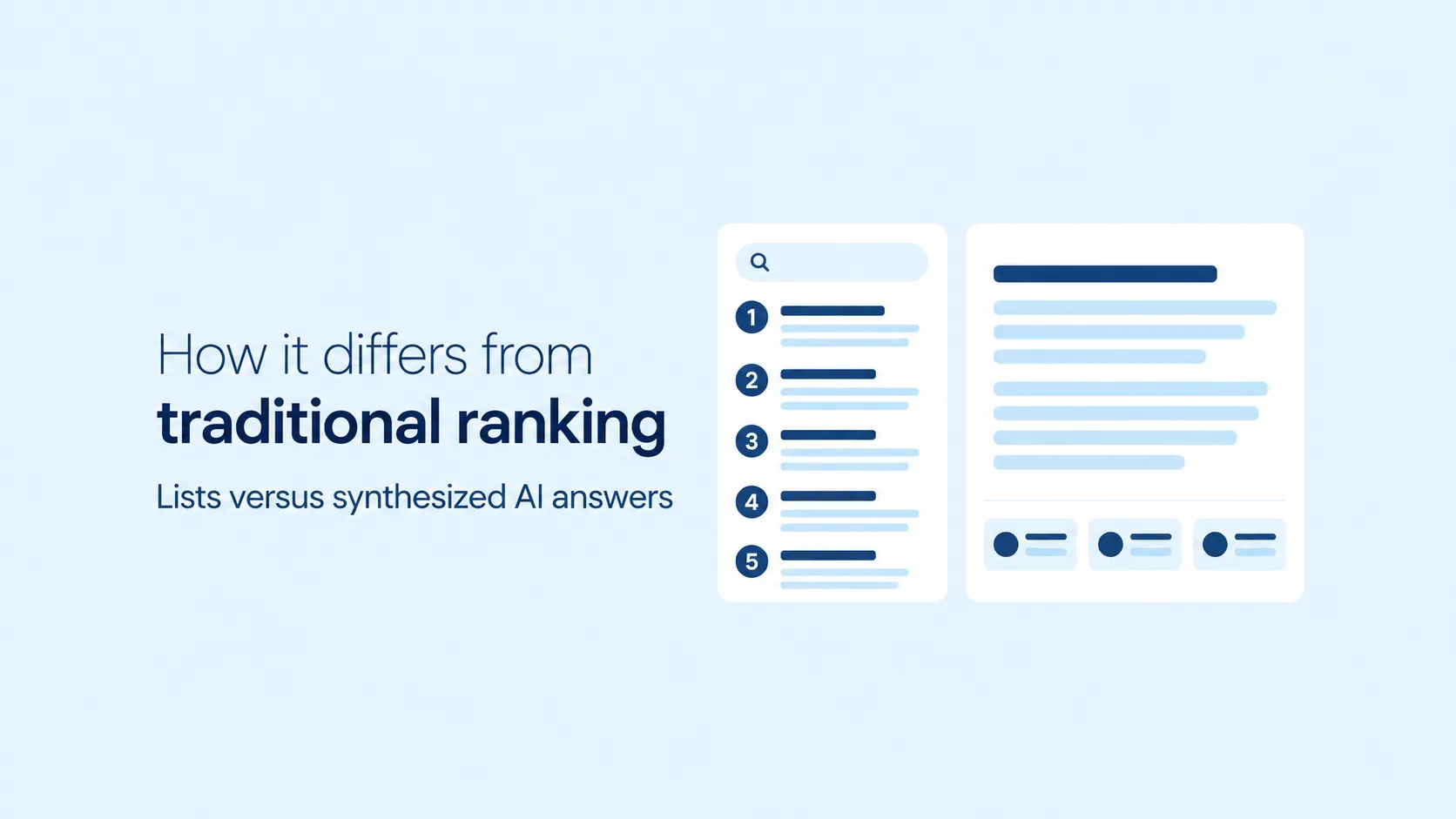
How it differs from traditional ranking
Traditional rankings are about position in a list. AI answer engines don't produce a list. Instead, they retrieve a set of candidate sources, then decide which facts to pull into a synthesised response, and inclusion depends on how easily a system can lift a clear, self-contained answer out of your page, not on where you sit in a results page. This guide deliberately covers tactics that apply across ChatGPT, Perplexity, Google's AI features, Gemini, and Copilot together, rather than focusing on any single engine's quirks in isolation, because most of the underlying levers (structure, extractability, credibility) are shared across all of them.
Universal tactics
How to improve Answer Inclusion Rate: tactics that apply everywhere
These are the foundations. Get these right before chasing platform-specific tweaks.
- 01
Lead with a direct answer, then expand
Open each key section with a one- to two-sentence answer to the question the heading implies, written so it can be lifted on its own. Save nuance, caveats, and examples for the sentences that follow.
- 02
Structure content for extraction, not just readability
Use descriptive H2/H3 headings that mirror how people phrase questions, short paragraphs, comparison tables, and numbered steps. AI systems favour content that maps cleanly onto a single, isolable idea per section.
- 03
Keep your site technically crawlable for AI bots
If an AI platform's crawler can't fetch and parse your page, none of your content quality matters. Check robots.txt rules, server response codes, and page-load reliability for the crawlers each platform uses, in the same way you'd audit for traditional search bots.
- 04
Build genuine topical authority
Answer engines lean on the same underlying signals as traditional search: consistent coverage of a topic, credible backlinks, and content that isn't a thin rewrite of what's already ranking. Publishing one isolated "AI-optimised" page rarely moves inclusion on its own.
- 05
Keep facts current and verifiable
Outdated statistics, old pricing, or superseded claims get filtered out during an engine's synthesis step. Refresh dates, figures, and product details on a schedule rather than leaving evergreen pages static for years.
- 06
Use structured data where it's genuinely relevant
FAQ, HowTo, and Article schema help some engines confirm what a page is answering, though it's a supporting signal rather than a guarantee, so treat it as one input among several, not a shortcut.
Platform-specific tactics
Platform-specific tactics
Once the foundations are in place, a handful of platform-specific habits push inclusion further:
ChatGPT
Structured formats such as bulleted lists, numbered steps, and short FAQs tend to get lifted close to verbatim, so make sure the exact wording you'd want quoted is the wording on the page.
Perplexity
Near-always cites its sources, so prioritise original data, first-party research, and clearly authoritative pages over generic commentary that just restates common knowledge.
Google AI Overviews & AI Mode
Google has been explicit that this is a continuation of standard SEO rather than a separate discipline, so the usual technical SEO, content quality, and Search Essentials work still carries most of the weight.
Gemini & Copilot
Both draw heavily on live web and index data, so pages that already perform well organically and load reliably tend to surface here too, on top of the structural tactics above.
SEO Analyser
How to track your Answer Inclusion Rate
Set a fixed list of 15–30 prompts your business genuinely wants to be found for, phrased the way a real user would type them. Run that same list across each AI platform on a consistent cadence (weekly or monthly), and log whether you appeared, whether you were cited by name or link, and how that shifts over time. Doing this by hand across five or six platforms doesn't scale for long, which is why most teams move to a dedicated tracker once the prompt list grows past a page or two.
SEO Analyser's AI Visibility module automates this tracking across ChatGPT, Gemini, Google AI Overviews, and other major engines from one dashboard, flags schema and content gaps holding a page back, and connects those gaps directly to the technical Web Audit so crawlability issues get surfaced alongside the content ones.
Explore AI VisibilityCommon mistakes
Common mistakes that hurt inclusion
- Chasing individual platform hacks before fixing basic crawlability and content quality.
- Publishing near-duplicate "AI-optimised" pages that add structure without adding new information.
- Treating inclusion as a one-off audit rather than a metric tracked on a schedule.
- Confusing inclusion with citation, and reporting one as if it were the other.
Frequently asked questions
FAQ
Is Answer Inclusion Rate the same as ranking in Google?
No. Ranking measures position in a traditional results list; inclusion measures whether an AI-generated answer used your content at all, which can happen with or without a top ranking.
Does this guide only cover ChatGPT?
No. This guide covers inclusion tactics that apply across all major AI answer engines. For guidance specific to ranking inside ChatGPT itself, see our dedicated ChatGPT ranking article.
How often should I check my inclusion rate?
Monthly is a reasonable starting cadence for most sites; weekly if you're actively running a GEO campaign or tracking a launch.
Summary
Inclusion is the metric that comes before citations and share of voice. Answer Inclusion Rate estimates how often an AI system pulls your content into its answers across the platforms your audience actually uses. Improve the foundations first: extractable structure, crawlability, authority, and freshness. Then layer on the platform-specific habits, and track a fixed prompt set on a consistent schedule rather than checking once and moving on.
Related reading and references
Sources and further reading
- SEO AnalyserHow to Measure AI Visibility Across AI Search Platforms
- GoogleOptimizing Your Website for Generative AI Features on Google Search
- Search Engine JournalGoogle's New AI Search Guide Calls AEO and GEO "Still SEO"
- Search Engine Land8 GEO Metrics to Track in 2026


