

AI Citation Preview Tool: How to Read a Cited Answer

 Sep 24,2026
 By SEO ANALYSER
AI Visibility
How to inspect a cited answer, distinguish a link from a mention, and interpret changes between runs.
Short answer
Inspect the answer behind a citation metric
SEO Analyser labels Citation Preview as an Estimated Preview of how a page appears as a cited source inside an AI answer across ChatGPT, Claude, Perplexity, Google AI Overviews and Grok. It supports inspection of the available answer and link evidence alongside the broader AI Visibility report. The interface notes: “Preview generated from how the page appears in this answer. AI platform behavior may change at any time.” The preview is an estimate, not a record of exactly how a platform generated its source list, proof that a content edit caused a citation, or a prediction of what an unpublished edit will produce.
Definition
What to check in a citation preview
Start with the prompt, platform, collection time and available answer text. Check whether the cited link leads to the tracked page, another URL on the same domain, or a different website. A brand name in the answer without a supporting link is a mention, not a linked citation.
Record only what the view actually exposes. If a complete source list, source order or retrieval time is unavailable, mark that field as unavailable instead of inferring it. An interface preview and the platform’s original answer may present sources differently; retain the original answer or link evidence when available.
A summary score and an individual answer describe different levels of evidence. Use the summary to identify a change worth investigating, then inspect the relevant answers. Do not assume a proprietary score uses a particular formula or a specific list-position check unless its methodology documents that behaviour.
For the wider measurement workflow, see how to measure AI visibility. This guide focuses on inspecting an individual answer.
Two observations collected under different conditions are not directly comparable. A different prompt wording, a different platform setting, or a different collection time can each change what is retrieved and shown, independent of anything on the tracked page. Note the collection conditions alongside the result, and treat a comparison across mismatched conditions as inconclusive rather than as evidence of a trend.
Worked examples
Two hypothetical citation outcomes
The examples below are invented teaching examples, not product screenshots or measured runs. They show how the same tracked page can have different outcomes across answers.
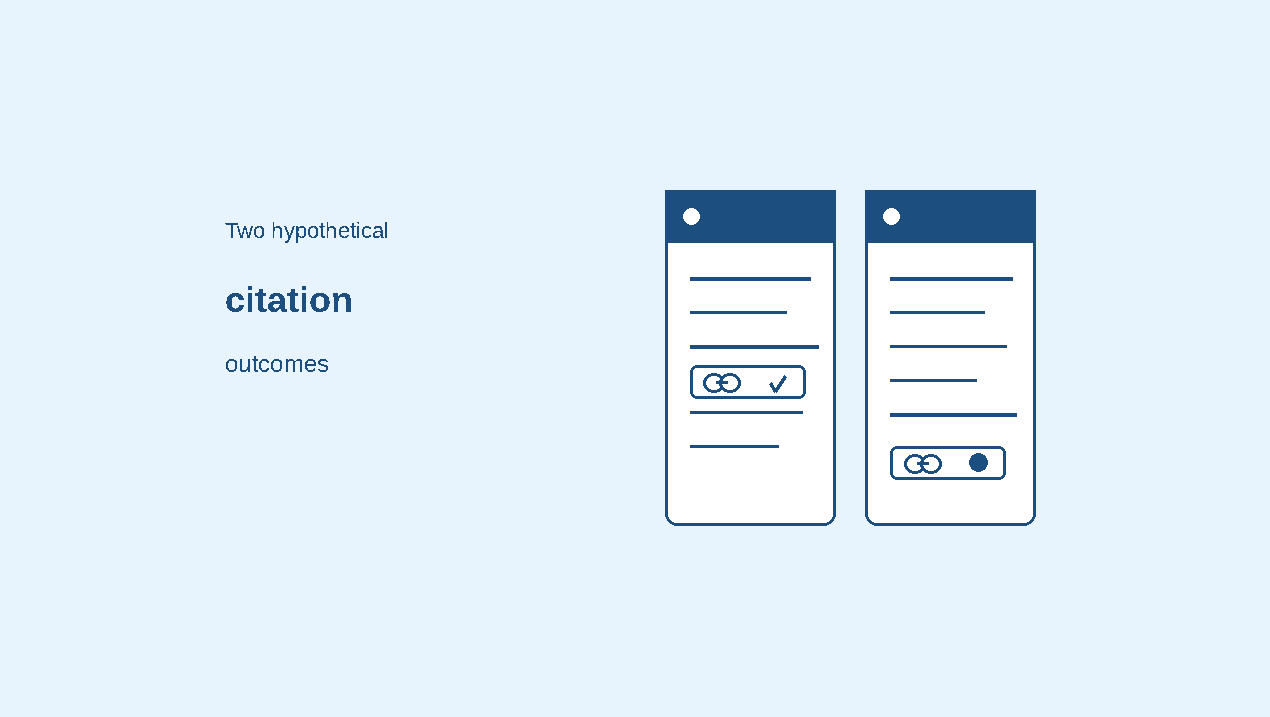
Prompt: How can a team monitor AI search visibility?
Observed answer: Six source links are visible.
Tracked page: Its URL appears second in that displayed list.
Prompt: The same question in a separate run.
Observed answer: Four source links are visible.
Tracked page: Its brand is mentioned, but none of the four links points to the page.
Prompt: A related question in a third run.
Observed answer: Five source links are visible.
Tracked page: One of the five links points to the same domain, but to a different URL than the one being tracked.
Example C is easy to record as a citation for the tracked page if only the domain is checked. Confirming the exact URL, not just the domain, is what separates a citation of the tracked page from a citation of something else the same site publishes.
Neither example establishes why the outcome occurred. Source titles and snippets may be rewritten by a platform; do not assume they were copied from the page’s heading or introduction.
Avg position cited
How to interpret Avg position cited
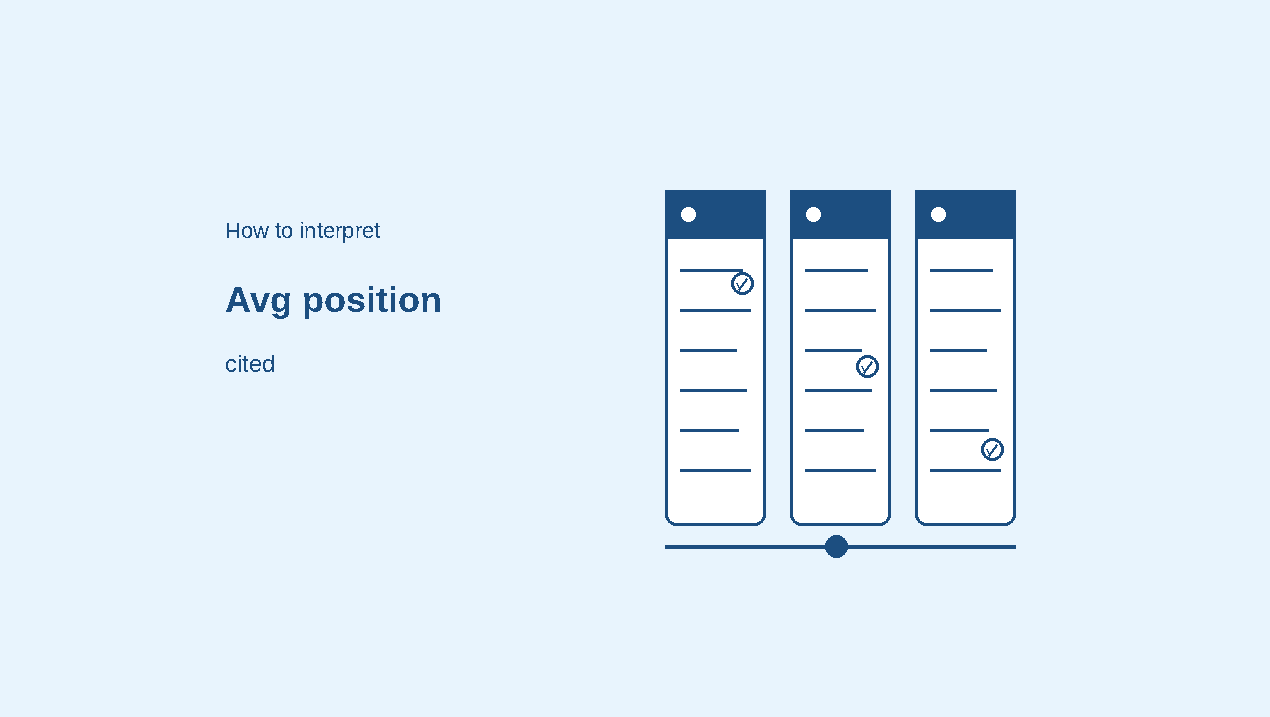
SEO Analyser uses the interface label Avg position cited. If a complete ordered source list is visible, the page’s place in that displayed list can be recorded as supporting evidence. For example, “second of six visible source links” describes an observation without claiming a conventional search ranking.
Inline citation numbers, source-card order and the order of brands in the answer are different things. An earlier source is not automatically more influential, and source order alone does not establish click-through rate or traffic. Compare the same presentation format and record when the interface changes.
Source order also is not necessarily comparable between platforms. One platform may present sources as numbered footnotes, another as a card list, and a third may not expose an ordered list at all. Recording "second of six" only means something when compared against another observation collected in the same presentation format on the same platform.
Monitoring use cases
A repeatable answer-review workflow
-
01
Capture a baseline
Save the exact prompt, platform, date, tracked URL and available answer evidence. Record relevant settings or model information when exposed.
-
02
Review the links
Open the cited destinations and distinguish the exact page from other pages on the same domain. Check whether the cited content supports the answer’s claim.
-
03
Compare repeated observations
Repeat a consistent set of prompts and preserve the results. A changed answer may reflect platform variability, retrieval changes or competitors, as well as changes made to the tracked page. A single repeat is not enough to separate normal variation from a genuine shift; keep several observations before drawing a conclusion from a change.
-
04
Assess a published change
After a change is published and can be retrieved, compare later observations with the baseline. A staging preview can check layout; it cannot verify a future live AI citation. Where possible, hold other variables constant between the baseline and the follow-up check, since a change to the prompt or platform alongside the content change makes the comparison harder to interpret.
Use Citation Preview alongside AI Visibility
AI Visibility presents Citation Preview alongside platform performance, prompt exploration and trend views. Use the individual-answer evidence to investigate a result, then use repeated observations to judge whether it persists.
Common questions
FAQs
Is Citation Preview the same as an AI Visibility score?
No. A preview supports inspection of a particular answer or cited source. A score summarises a broader set of signals; its calculation depends on the product’s documented methodology.
Can a brand be mentioned without being cited?
Yes. Record a plain-text brand mention separately from a link to a source. Also distinguish a link to the tracked page from a link to another page on the same domain.
Does a citation after an edit prove the edit worked?
It establishes that the later answer cited the page. It does not isolate the cause. Compare repeated runs and note platform, prompt, retrieval and other changes.
Can a future citation be verified before publishing?
No. Proposed content and layout can be reviewed before publication, but a live citation depends on subsequent retrieval and answer generation.
How often should citation previews be reviewed?
Choose a schedule appropriate to the prompts and reporting cycle, and add checks after material published changes. Keep the method consistent so comparisons are useful.
Can citation previews from different platforms be compared?
Only with caution. Platforms differ in how they present sources, and a difference between two platforms may reflect that presentation difference rather than a real difference in how each platform treats the page.
If a tracked page is cited but a competitor is listed first, does that mean the competitor is winning?
It means the competitor appeared earlier in that displayed list for that answer. It does not by itself establish which page a reader is more likely to visit or trust; treat it as one observation to track over repeated runs rather than a standalone verdict.
Summary
Inspect the available answer, verify its links and keep mentions, citations and source order separate. Record missing fields honestly. Compare repeated observations after a published change, and avoid treating a preview as a prediction, a traffic measurement or proof of causation.
References
Sources and further reading
- SEO AnalyserAI Visibility and Citation Preview
- Google Search CentralAI features and websites


