How to Audit a Google Business Profile for Completeness

 Sep 21,2026
 By SEO ANALYSER
Local SEO · Google Business Profile
A practical guide to profile audits, completeness scoring and the boundary between a periodic check and ongoing Local SEO management.
Short answer
What does a Google Business Profile audit tool check?
A Google Business Profile audit tool reviews core listing fields such as business information, categories, hours, services, photos, attributes and descriptions. A useful audit turns those checks into a repeatable completeness assessment and a prioritised list of gaps, while ongoing monitoring and management remain separate activities.
Definition
What a Google Business Profile audit covers
A profile audit compares the current listing with a consistent checklist. The review normally covers the business name, address, phone number, verification status, primary and secondary categories, services, products, regular hours, special hours, photos, videos, attributes, description and opening date. The purpose is to identify missing, inaccurate or stale information.
An audit is not the same as rank tracking, review monitoring or ongoing profile management. Some platforms place those activities in one product, but the audit itself remains a point-in-time assessment. This distinction prevents a completeness score from being treated as a promise of higher rankings.
Periodic diagnosis
Checks documented fields, records gaps and creates a prioritised action list.
Continuous maintenance
Keeps hours, posts, photos, reviews and other profile activity current over time.
A complete-looking listing can still contain less obvious gaps. A secondary category may be absent, holiday hours may be outdated or an attribute may no longer describe the premises. A structured audit catches these issues because the same checklist is applied to every review.
Why it matters
Why profile completeness matters
Google reports that customers are 2.7 times more likely to consider a business reputable when they find a complete Business Profile on Google Search and Maps. Google also reports that customers are 70% more likely to visit and 50% more likely to consider purchasing from businesses with a complete profile.
These figures describe customer likelihood, not a guaranteed increase in visits or purchases. They also do not establish a direct comparison with incomplete profiles beyond the wording published by Google. Keeping that distinction intact avoids turning guidance into a stronger performance claim than the source supports.
Completeness also supports practical decision-making. Missing hours, outdated contact details or absent attributes can introduce uncertainty during a local search. Google states that complete and accurate information can make a business more likely to appear in relevant local results, while local ranking also depends on distance and prominence.
The alternative
Manual checks compared with an audit tool
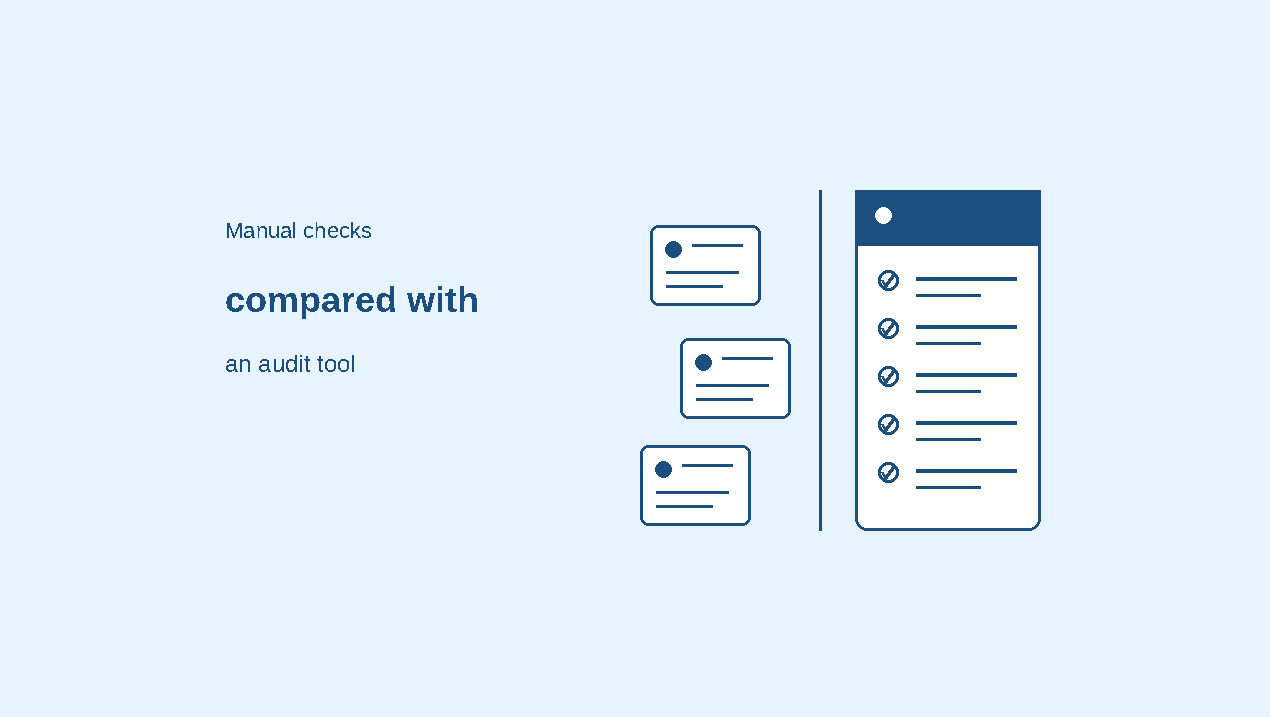
A manual review can work for a stable single-location business with a short checklist. A structured audit becomes more valuable when the same checks need to be repeated, compared or assigned across several profiles.
| Task | Manual review | Structured audit |
|---|---|---|
| Field coverage | Coverage depends on the reviewer and the checklist used. | The same documented fields are checked in every run. |
| Change over time | Previous findings may be difficult to compare without a saved record. | Repeated runs create a clearer history of resolved and recurring gaps. |
| Prioritisation | Issues may be fixed in the order they are noticed. | Findings can be grouped and prioritised by customer and search impact. |
| Multiple locations | Effort increases with each additional profile. | A consistent checklist reduces process variation across locations. |
SEO Analyser plans include up to three Local SEO locations, and additional locations are purchasable. Examples based on thirty included locations would therefore misrepresent the current plan structure. A three-location example better reflects the included scope while still showing why a repeatable process matters.
Audit checklist
Six areas a profile audit should review
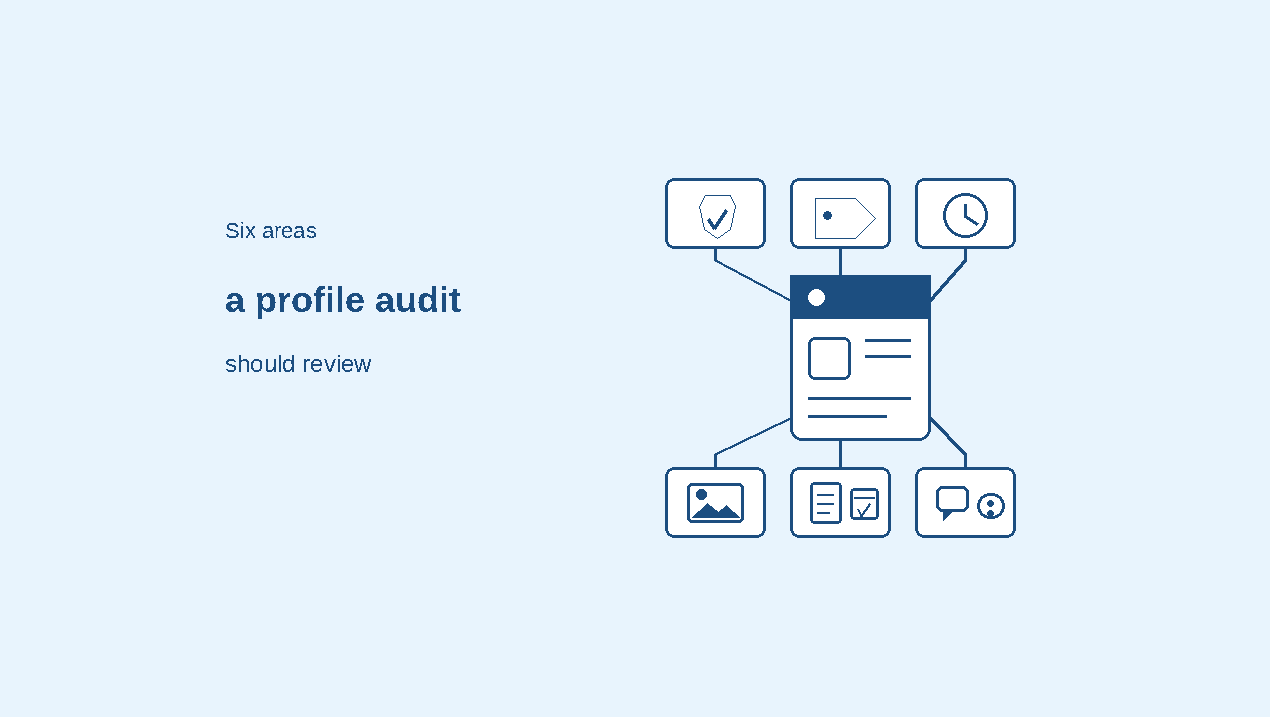
The following groups provide a practical audit sequence based on Google Business Profile guidance. The final weighting may vary between tools because Google does not publish an official completeness formula.
- 01
Business information and verification
Check the business name, address, phone number, website and verification status. Details should represent the real business and remain accurate across customer-facing surfaces.
- 02
Categories, services and products
Review the primary category, relevant secondary categories and the services or products available for the business type. Categories should describe the core activity rather than act as keyword containers.
- 03
Regular and special hours
Confirm normal opening hours and temporary changes for holidays, events or closures. Incorrect hours can create an immediate customer-service problem even when the rest of the profile is complete.
- 04
Photos, videos and attributes
Check whether visual assets remain representative and whether relevant attributes, such as accessibility, parking or service options, are accurate. Available attributes vary by category.
- 05
Description and opening date
Review the description for accuracy and specificity, then confirm the opening date where applicable. Google may use the opening date to communicate how long a business has operated.
- 06
Reviews and public questions
Record unanswered reviews and questions as maintenance findings. These items are not simple profile fields, but they affect the quality and usefulness of the public listing.
The score
How a completeness score should be interpreted
Google does not publish an official numeric completeness score or a weighting formula. An audit tool creates its own score by translating documented profile fields into a checklist and assigning weights to the findings. Different tools may therefore produce different numbers for the same profile.
The value lies in consistency rather than false precision. The same fields should be checked in the same way on each run, and the underlying findings should remain visible. A score without field-level evidence makes it difficult to understand what changed or what requires attention.
Next step
Audit findings need an ongoing process
An audit answers whether the profile is complete and current at the time of review. Ongoing Local SEO management addresses what happens afterwards: maintaining hours, publishing appropriate updates, adding current photos and responding to reviews.
A quarterly review can provide a reasonable baseline for a stable profile, with additional checks after changes to categories, services, contact information, hours or location structure. The interval should reflect how often the business changes rather than follow a universal rule.
Related citation work has a separate scope. A Local SEO citation audit checks public business mentions across directories and map sources, while a Google Business Profile audit focuses on the profile and its management signals.
SEO Analyser · Local SEO
Turn profile gaps into a field-level action list
SEO Analyser’s Local SEO module checks profile completeness and provides per-field fix instructions. The same module also supports Google Business Profile posts and review replies, helping a team move from periodic diagnosis to ongoing maintenance.
Explore Local SEOCommon questions
Frequently asked questions
What is a Google Business Profile completeness score?
It is a tool-defined score based on how many relevant profile fields are present, accurate and current. Google publishes guidance on completing a profile but does not publish an official numeric completeness formula.
Does a higher completeness score guarantee a better local ranking?
No. Google describes relevance, distance and prominence as the main local ranking factors. Completeness can support relevance, but no profile score guarantees a ranking position.
How is a profile audit different from Local SEO management?
An audit is a point-in-time or periodic assessment. Local SEO management is the ongoing work of maintaining profile information, posts, photos, reviews and related activity.
How often should a Google Business Profile audit run?
A quarterly review is a practical baseline for many stable profiles. Additional checks are useful after changes to hours, categories, services, contact information or location structure.
Can an audit tool fix every issue automatically?
No. An audit can identify and prioritise gaps, but many corrections require business context, account access or manual confirmation before publication.
Is a profile audit useful for several locations?
Yes. A consistent checklist helps reduce process variation across several profiles. SEO Analyser plans include up to three Local SEO locations, with additional locations available for purchase.
Summary
A profile audit is a repeatable diagnosis
A Google Business Profile audit checks documented fields, identifies missing or stale information and turns the findings into a prioritised action list. Google reports that complete profiles are associated with stronger customer consideration: 2.7 times greater likelihood of being considered reputable, 70% greater likelihood of a visit and 50% greater likelihood of purchase consideration.
The figures describe likelihood rather than guaranteed outcomes. The resulting completeness score is tool-defined, not an official Google metric, and ongoing Local SEO management remains necessary after the audit.
References
Sources and further reading
- GoogleGuidance on completing a Business Profile
- GoogleGuidance on improving local ranking
- GoogleBusiness Profile Help Centre
- SEO AnalyserLocal SEO product page
- SEO AnalyserLocal SEO citation audit guide